AI Testing Platform for Product & Delivery Teams
Gain real-time visibility into test coverage, catch regressions early, and deliver confidently, without writing a single line of code.

Who is this for?
You’re accountable for delivering quality — but without owning the code or the tests.
You rely on QA and Dev to catch bugs early, but end-to-end tests are always late, flaky, or missing. And when something breaks in prod, everyone looks at you.
Thunders gives you back visibility, speed, and control — without needing to write a single line of code.
How Thunders
helps you
See what’s really tested — and what’s not
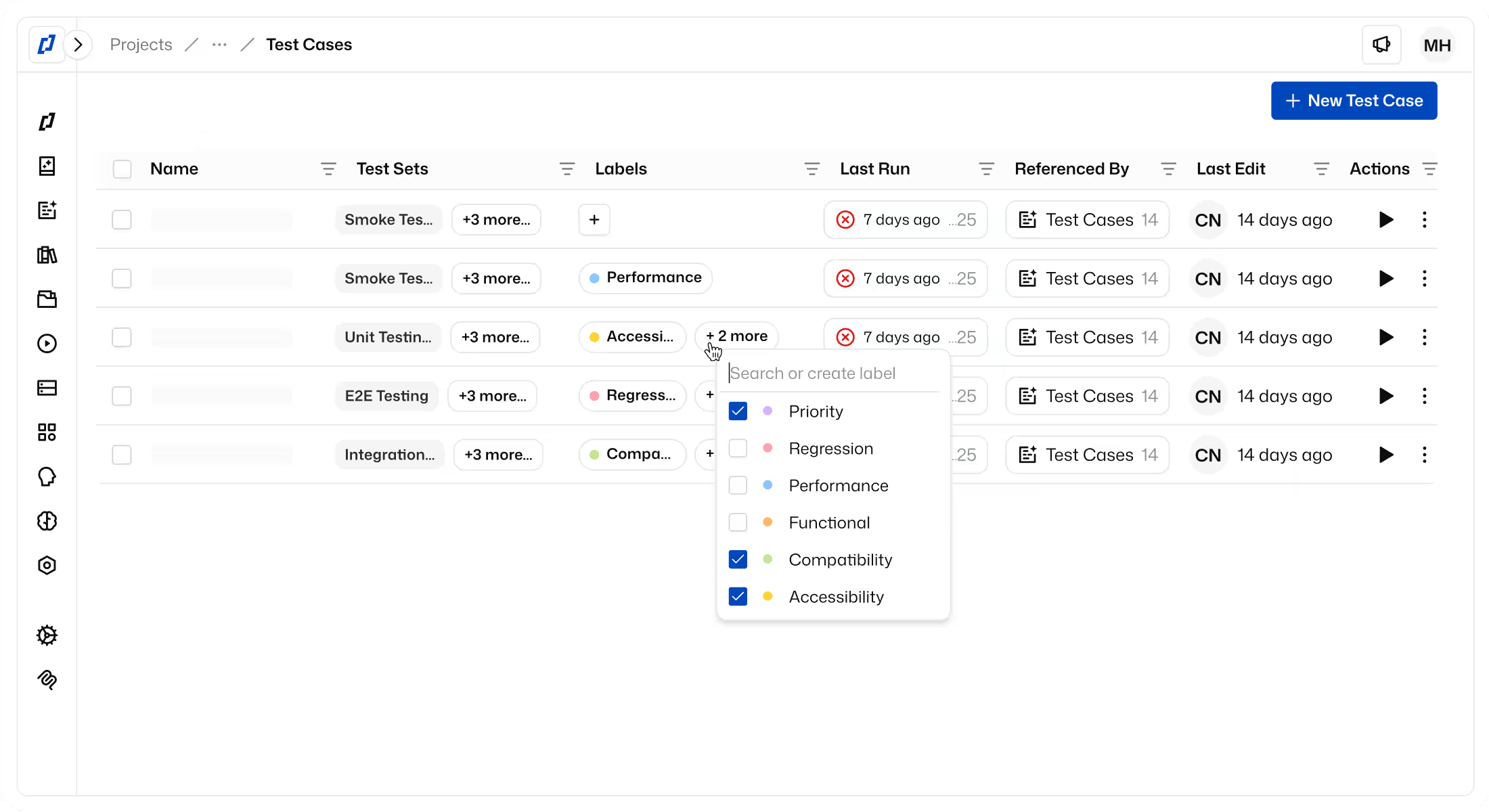
Get real-time visibility into what user journeys are covered, where the gaps are, and how confident you can be before a release.
No more waiting for test scripts
Test coverage is generated as you go. New features can be validated without weeks of QA backlog.
AI that tests like your users
Thunders doesn't just check boxes — it understands full product flows (sign-up, payment, onboarding) and validates them end-to-end.
Confidence you can report on
Export test coverage, outcomes, and regressions in business-readable format — to communicate clearly with stakeholders.
Popular use cases
for PMs
Validate key user journeys before every release
Know instantly what’s covered and what’s not
Speed up release cycles by reducing manual testing
Catch regressions in real flows (not just edge cases)
What makes
Thunders different
No technical barrier
Use the product without being technical
Full visibility without micromanaging
Test coverage you can trust
Faster iteration cycles
Product quality doesn’t block product speed
Frequently Asked Questions
What is a testing platform and what can it bring to product managers ?
A testing platform is a centralized solution that allows the planning, execution, and analysis of an application's tests throughout its entire lifecycle. For a product manager, it provides a clear view of delivered quality, real-time defect tracking, and decision-making support for release trade-offs. It aligns teams around shared indicators and facilitates traceability among requirements, tests, and deliveries. Thunders.ai offers a platform designed to bring Product Owners, QA teams, and delivery squads together around a single source of truth.
How does a testing platform accelerate a product's time-to-market ?
A modern testing platform accelerates time-to-market by automating repetitive tasks, catching defects earlier in the cycle (shift-left), and reducing costly backtracking. Self-healing test capabilities prevent blockages related to maintenance, while CI/CD pipelines enable frequent and secure deployments. Product managers gain predictability over deadlines and can prioritize new feature developments over fixing regressions. The result is faster, more reliable releases that are closely aligned with market expectations.
How do you choose a testing platform tailored to a product team ?
The choice is based on several criteria: ease of adoption for non-technical profiles (Product Owners, business analysts), functional coverage (web, mobile, API), the quality of business-oriented reporting, and the ability to integrate into existing tools (Jira, Confluence, CI/CD). It is also important to evaluate the transparency of results, traceability management, and available support. Running a POC on a pilot product helps validate the actual fit before a global rollout. For product teams, the goal is to choose a platform that speaks their language and grants them autonomy.
What is the ROI of a testing platform for product delivery ?
ROI is measured across multiple axes: accelerated releases, a reduction in production incidents, lower costs for fixing defects (since they are caught earlier), and improved user satisfaction. For delivery teams, this translates into better sprint predictability and reduced stress during production rollouts. Translating these gains into business value (more frequent launches, competitive responsiveness, customer loyalty) reinforces the legitimacy of the investment. The ROI should be evaluated across the full product lifecycle, not just during the testing phase.
How does a testing platform integrate into an Agile and SAFe cycle ?
In an Agile cycle, the testing platform aligns with sprints: tests are planned in the backlog, executed during the sprint, and reviewed during the retrospective. CI/CD pipelines automatically trigger tests with every commit, providing rapid feedback to teams. Within a SAFe framework, the platform coordinates with Program Increments and ARTs (Agile Release Trains) to offer a consolidated view of quality at scale. It also facilitates cross-team coordination through shared indicators and end-to-end traceability.
How do you align product, QA, and delivery teams around a common testing platform ?
Alignment is achieved through three levers: a single platform that serves as a shared reference, common indicators (coverage, quality, velocity), and collaborative rituals (quality reviews, sprint planning, retrospectives). A modern platform must allow each profile to interact using their own language: business terms for Product Owners, technical data for developers, and quality metrics for testers. Traceability among requirements, tests, and defects ensures that everyone works from the exact same source of truth. Thunders.ai was designed to foster this alignment by offering tailored views for each role within a unified platform.
Ready to ship faster with smarter testing?