.jpeg)

TLDR
AI is reshaping software testing by automating repetitive tasks, but human testers remain essential for strategic thinking, user empathy, and quality-driven decision-making in QA.
The integration of artificial intelligence (AI) into software testing has sparked intense debate about the future of human testers. As AI technologies advance, their growing capability to handle complex tasks raises questions about the obsolescence of human testers. This article examines AI’s current role in software testing, its impact on Quality Assurance (QA) roles, and whether AI is truly replacing human testers or enhancing their capabilities.
Introduction to AI in Software Testing
The software testing industry is undergoing a transformation through AI and Machine Learning (ML) technologies. These advances aim to improve efficiency, reduce costs, and enhance software quality. In 2025, AI is set to play a pivotal role in software testing through automated test generation, self-healing capabilities, and predictive analytics that identify potential defects before they appear in production environments.
Key Trends in AI-Driven Testing
Several trends highlight the evolving landscape of software testing:
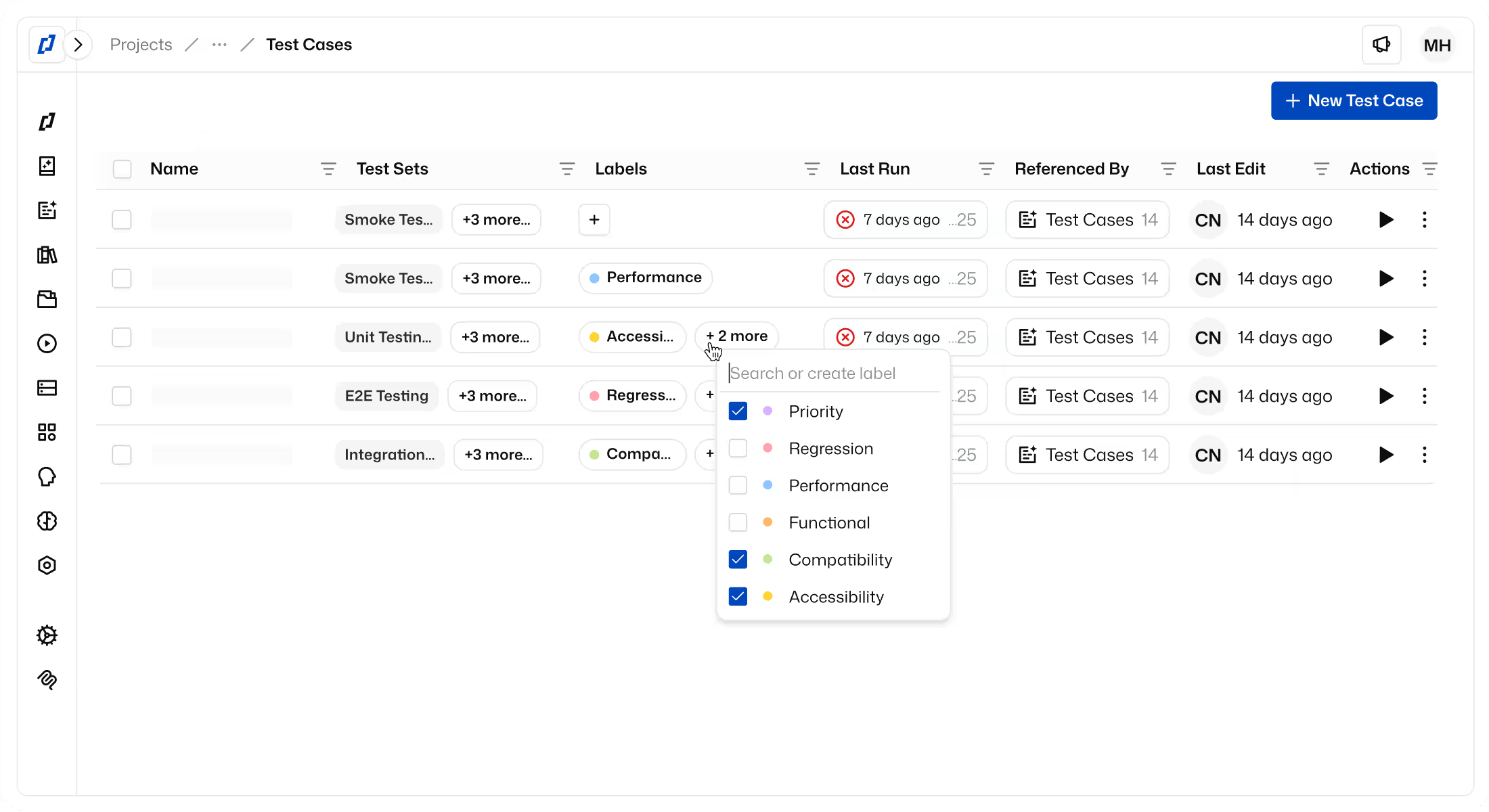
- AI and ML Integration: AI transforms testing by generating test cases, enabling self-healing scripts, and creating test data to reduce manual effort. It enhances automated testing through code snippet generation, allowing testers to focus on strategic tasks.
- Predictive Analytics: AI tools analyze historical data to predict defects, helping testing teams allocate resources more effectively. This proactive approach minimizes the risk of critical defects reaching production.
- Self-Healing Automation Scripts: AI-powered scripts automatically adapt to UI changes, reducing maintenance efforts and ensuring test automation remains effective in dynamic development environments.
- AI-Guided Manual Testing: While automation leads efficiency discussions, manual testing remains essential. AI solutions generate ideas for new manual tests and convert them into actionable test cases, reducing test design time and effort.
Impact on QA Roles
The integration of AI in software testing isn’t about replacing human testers — it’s about augmenting their capabilities. AI excels at handling repetitive, data-intensive tasks, freeing human testers to focus on complex scenarios that require critical thinking and decision-making. This synergy between AI and human intelligence is vital for achieving superior testing outcomes.
Will AI Replace Human Testers?
Despite AI’s impressive capabilities, it’s unlikely to fully replace human testers. Testing involves more than identifying defects — it requires understanding user needs, empathizing with experiences, and adapting to unexpected scenarios, all of which demand a human touch. AI tools support testers by automating routine tasks, enabling them to focus on strategic aspects like user experience and security.
The Future of Human Testers
As AI evolves, human testers’ roles will shift toward more strategic and creative responsibilities. Testers must upskill to effectively use AI-assisted tools, focusing on areas requiring human insight and judgment. This transformation will boost productivity and efficiency, helping teams deliver higher-quality software faster.
Conclusion
AI is transforming software testing by enhancing efficiency, scalability, and quality. While AI can handle complex tasks, it serves as a complementary tool rather than a replacement for human testers, freeing them to focus on strategic and creative aspects. Looking toward 2025 and beyond, the partnership between AI and human testers will be essential for achieving superior software quality and meeting modern software engineering demands.
Additional Insights:
AI Adoption Challenges:
While AI offers many benefits for testing, organizations face several hurdles — including reliability concerns, integration complexities, and high initial costs. These barriers are gradually decreasing as AI technologies become more mature.
Ethical AI Testing:
With AI’s increasing prominence, organizations are prioritizing transparency, fairness, and accountability in AI-driven systems. This focus includes testing AI systems to prevent bias and ensure fair outcomes.
Upskilling Testers:
Effective AI implementation requires testers to develop new skills in using AI-assisted tools. This means learning to harness AI to boost productivity and concentrate on strategic testing work.
References:
1 OnPath Testing. (2025). Top 5 QA Testing Trends in 2025.
2 KiwiQA. (2024). How AI Testing Is Transforming the Future of QA in 2025.
3 Davis. (2025). Software Testing AI: 4 Breakthroughs You Can’t Ignore in 2025.
4 Millims. (2025). The Future of AI in Software Quality Assurance: 2025 Insights.
5 TechNewsWorld. (2024). AI Can Improve CX, QA Without Cutting Jobs, Software Expert Says.
6 Bakshi. (2025). AI’s role in helping QA Managers Deliver Superior Outcomes in 2025.
7 Singh. (2025). The Future of Testing: Will AI Replace Testers?
8 Xray Blog. (2025). The top 5 software testing trends for 2025.
9 Functionize. (2023) The Human Element in AI-Driven Testing Strategies.