End-to-End Testing
Stop writing tests. Let them emerge. Thunders builds E2E tests from real user behavior - describe the journey in natural language, and the AI Parsing Engine turns it into a complete, executable scenario. Tests that self-heal when your UI changes. Runs across every browser. Ships inside your CI/CD pipeline.











Why choose Thunders for End-to-End Testing

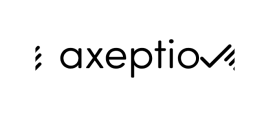
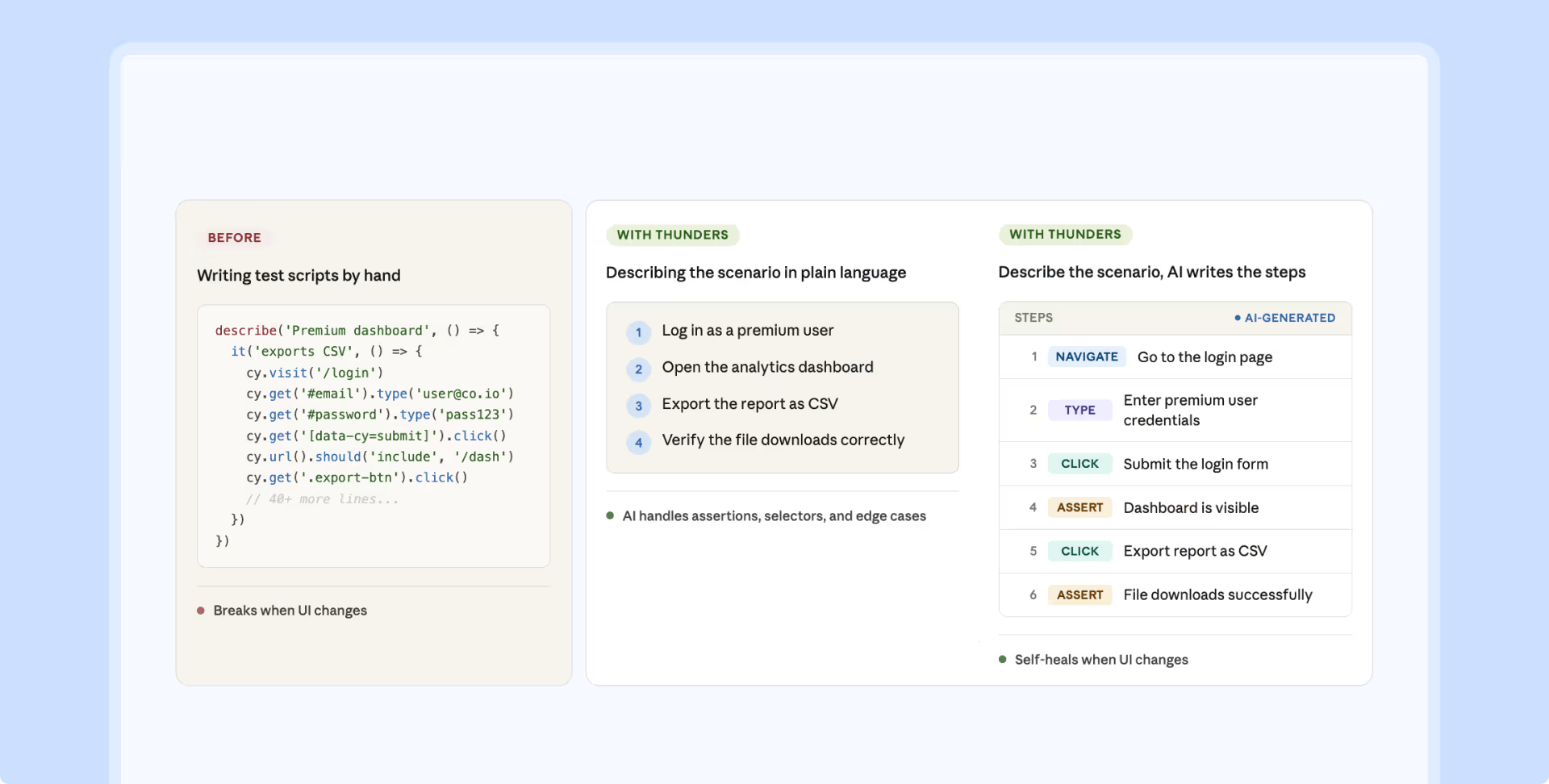
Generate E2E tests from natural language
Describe the user journey you want to validate and Thunders turns it into a complete, executable test scenario.

Tests that emerge from real user behavior
Record real browser interactions with the Thunders Recorder and convert them into executable test cases.

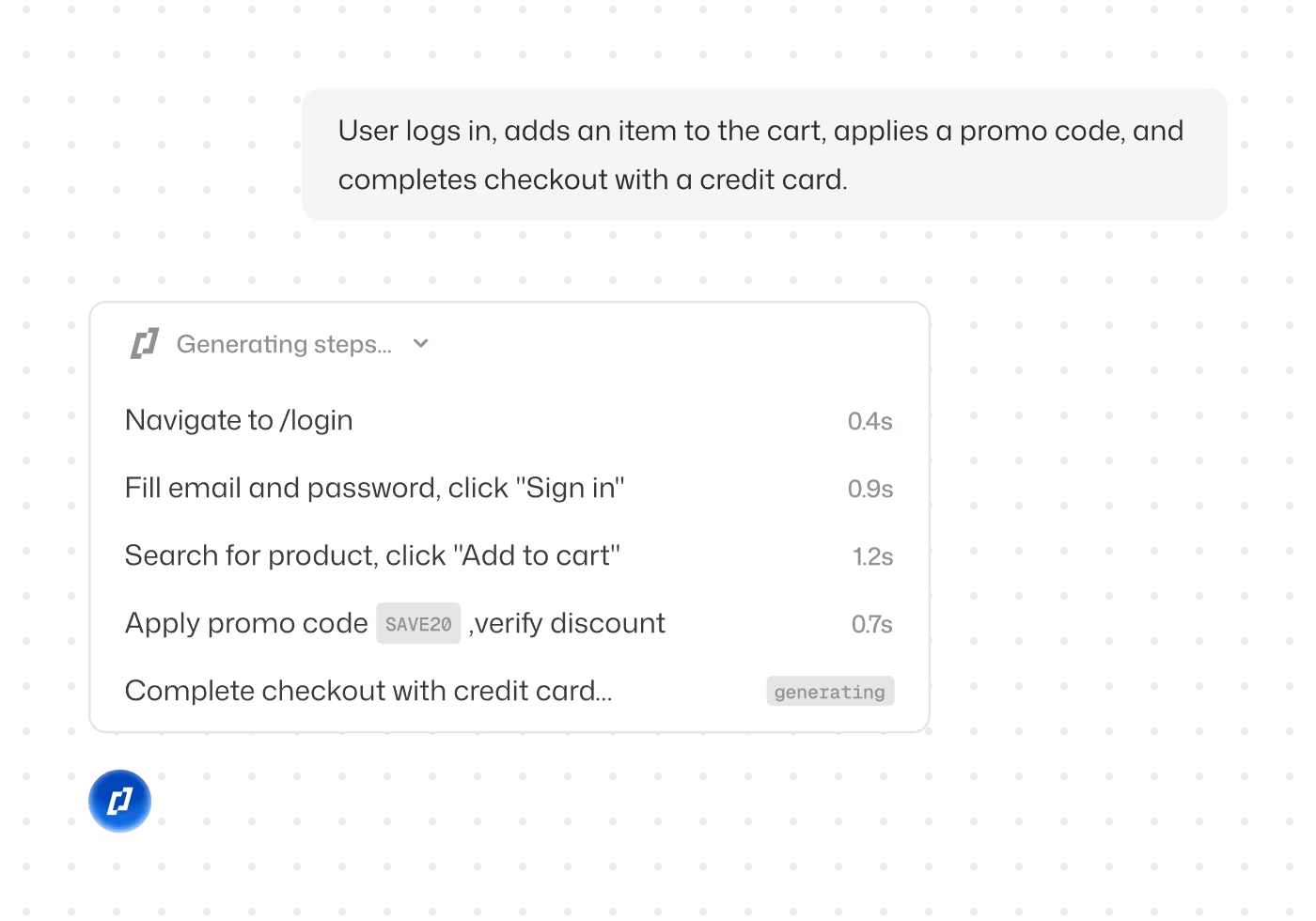
ML-Based Auto-Healing keeps tests green
When your UI changes, tests do not break. Thunders detects the difference and repairs steps automatically at runtime.

Run tests across all browsers without extra setup
Execute the same test on Chrome, Firefox, Safari, and Edge. No separate configuration per browser. Just select and run.

Validate flows with AI Personas
Run the same E2E scenario through different AI Personas: QA, Accessibility, Security, and more. One test, multiple expert-level validations.

Integrate E2E tests directly into CI/CD
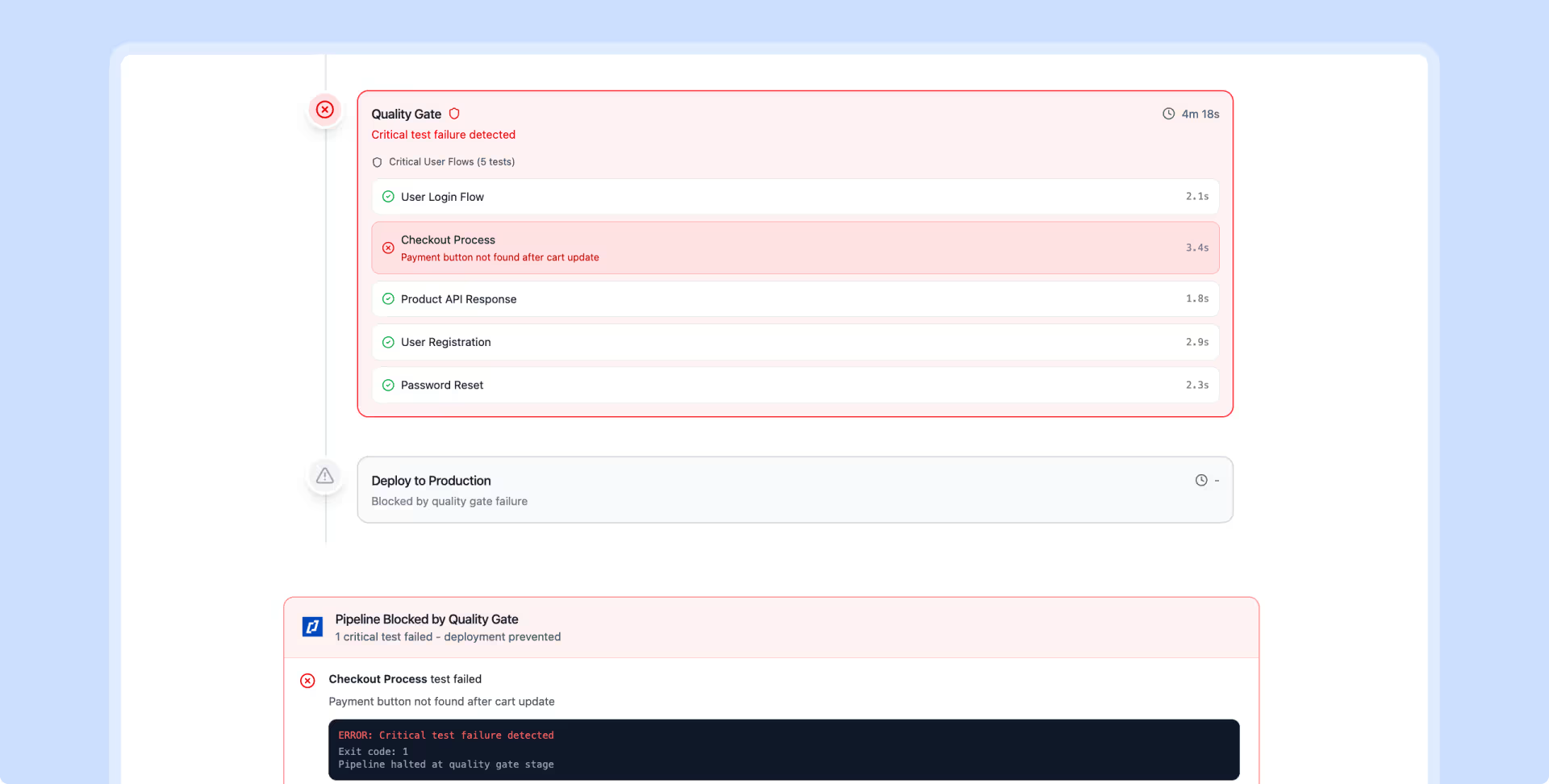
Connect to GitHub Actions, GitLab CI, Jenkins, or CircleCI. Run E2E tests on every PR or deploy and block merges when critical flows fail.
End-to-End Testing Use Cases
Define your most important journeys once in natural language. Thunders runs them on every release and blocks the deploy if checkout, sign-up, or activation breaks - no matter how the UI has changed.
Build a regression suite from your real product flows. ML-Based Auto-Healing keeps it stable as the codebase evolves, so you get accurate signal - not noise from flaky, outdated tests.
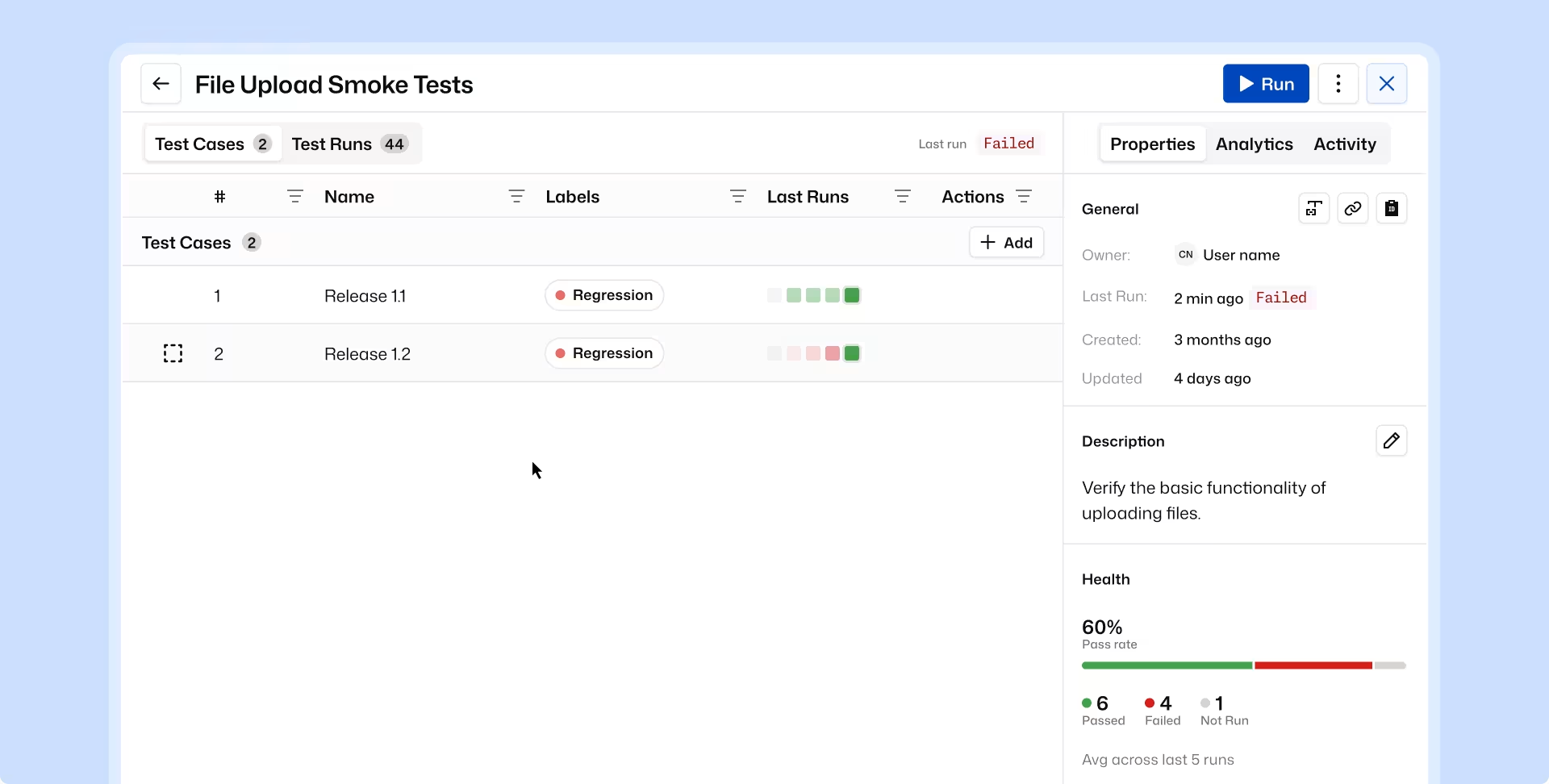
Multi-page forms, wizard flows, authenticated handoffs - Thunders handles complex, stateful scenarios end to end. Describe the full journey once; Thunders executes it reliably.
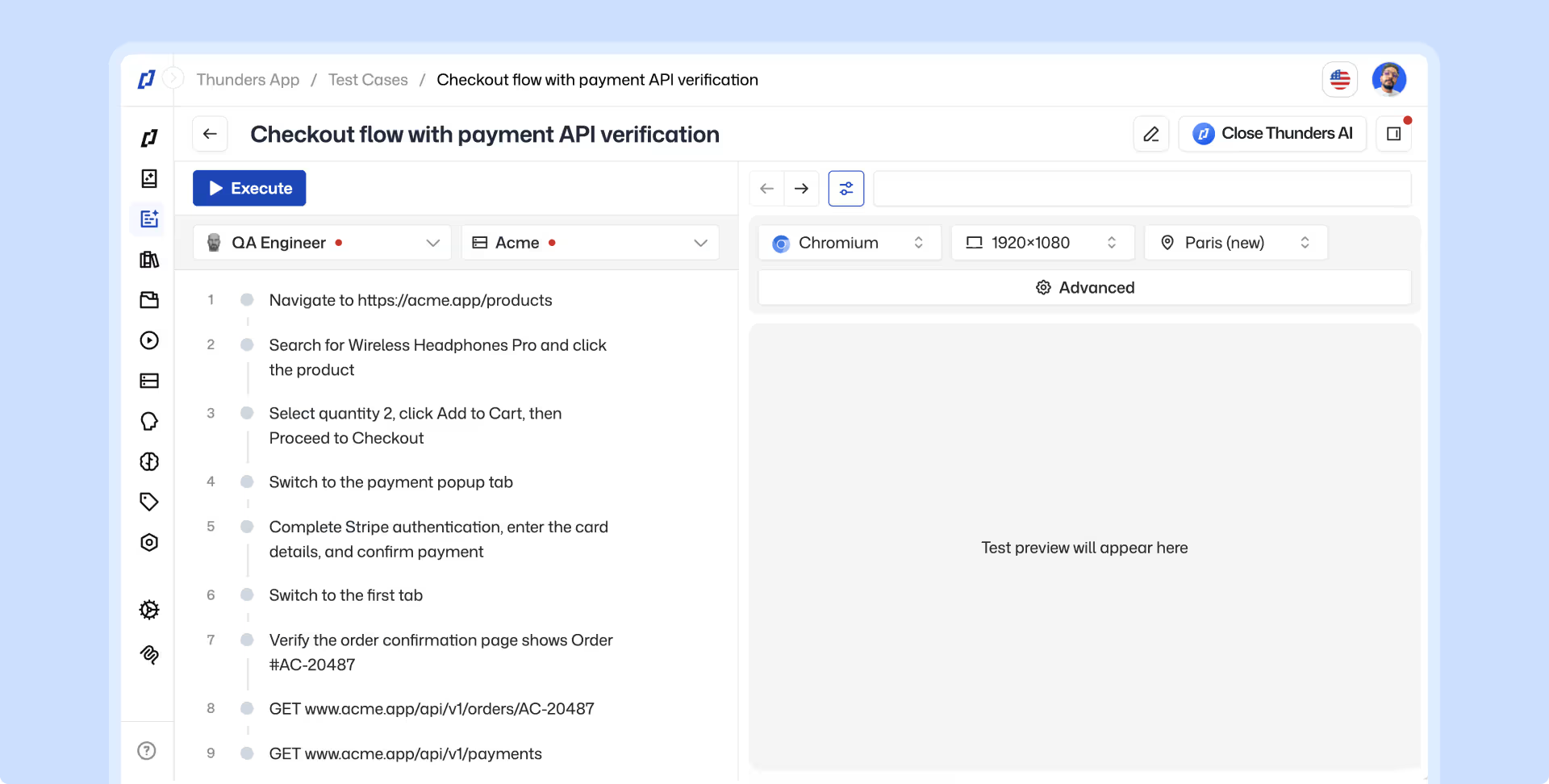
Anyone on the team can author E2E tests by describing the scenario in natural language. The AI Parsing Engine handles assertions and edge cases automatically - no test framework setup required.
From the very first tests, Thunders caught real bugs in our interface — bugs that had slipped through all our standard quality processes. Before Thunders, all UI testing was done manually. With Thunders, everything is end-to-end automated. Thunders lets us generate tests very quickly and improve the overall quality of our product. This is our QA of the future.
Wassim Jouini
CTO
@
LegalPlace

Discover Thunders' features
Frequently Asked Questions
What exactly is an end-to-end test?
An end-to-end (E2E) test simulates a complete user journey through an application, from the user interface down to the back-end systems (databases, APIs, third-party services). It validates that all technical layers function correctly together under conditions close to production. Unlike unit tests that isolate a single component, an E2E test checks the overall behavior of the system. It is one of the pillars of a quality strategy to guarantee reliability before going live.
What are the different types of E2E tests (horizontal vs. vertical)?
Horizontal E2E tests cover a cross-functional user journey that spans multiple applications or modules (e.g., placing an order on an e-commerce site, from product selection to payment completion). Vertical E2E tests validate a deep workflow through all layers of a single application (UI, business logic, database). Both approaches are complementary: horizontal testing validates the overall user experience, while vertical testing guarantees technical consistency. The choice depends on the functional context and criticality.
Why are E2E tests important in software development?
E2E tests detect integration defects that unit or integration tests cannot see, such as issues between services, data inconsistencies, and regressions on user journeys. They provide high confidence before each production deployment by simulating real usage. They are particularly critical for workflows with high business value (payments, registration, regulated processes). Without E2E tests, an application may function unit by unit but fail in its overall usage.
How does the E2E test lifecycle work?
The lifecycle begins by identifying critical user journeys based on user stories or functional specifications. Next comes designing the test cases, implementing them (manually or through automation), running them in representative environments, and analyzing the results. Detected defects are reported and fixed, and then the tests are rerun to validate the fix. Finally, E2E tests continuously evolve alongside the application, which requires regular maintenance.
What are the differences between manual and automated E2E tests?
Manual E2E tests rely on a tester who executes the journey step-by-step, allowing for detailed observation but becoming costly and slow at scale. Automated E2E tests are scripted and executed by tools, guaranteeing speed, repeatability, and execution with every deployment. Automation is ideal for regression testing, whereas manual testing remains relevant for exploratory testing and user experience evaluation. The best strategy generally combines both approaches based on criticality.
How do E2E tests compare to unit and integration tests?
Unit tests validate an isolated function, integration tests check the interaction between multiple components, and E2E tests cover the entire system. The testing pyramid recommends a majority of unit tests (fast, targeted), an intermediate layer of integration tests, and a smaller number of E2E tests (slower and more expensive, but essential). Each level has its value, and none replaces the others. A mature testing strategy balances all three according to project demands.
What are the challenges and drawbacks of E2E tests?
The main challenges include slow execution speeds, fragility when faced with interface changes, the complexity of setting up test environments, and high maintenance costs. E2E tests are also prone to “flakiness” (intermittent failures not related to actual bugs), which erodes team trust. Finally, they can be difficult to debug because they traverse numerous technical layers. Modern solutions like Thunders.ai address these challenges using AI and self-healing.
What tools and frameworks should be used for E2E testing?
Popular open-source frameworks include Cypress, Playwright, Selenium, and Puppeteer for the web, and Appium for mobile. Commercial platforms like Thunders.ai, Mabl, Testim, or Functionize add AI capabilities, self-healing, and advanced reporting. The choice depends on the language used by the team, the technical stack, and the desired level of automation. For teams seeking rapid setup and generative AI, all-in-one platforms like Thunders.ai offer an efficient balance.
What are the best practices for implementing E2E tests?
Best practices include: targeting critical user journeys first, maintaining a reasonable number of tests to limit execution costs, isolating test environments, managing test data deterministically, and investing in stability (avoiding flakiness). It is also recommended to execute E2E tests within the CI/CD pipeline, but after faster tests have run. Finally, collaboration between developers and testers on test design ensures the business relevance of the scenarios.
How do you integrate E2E tests into a CI/CD pipeline?
Integration involves triggering E2E test execution automatically at specific stages of the pipeline, generally after unit and integration tests. Results are published in reports accessible to the entire team, and quality gates can block a release in case of failure. To optimize duration, execution can be parallelized across multiple environments, and intelligent test selection can be applied based on code changes. The goal is to obtain fast feedback without sacrificing coverage.
Ready to ship faster with smarter testing?