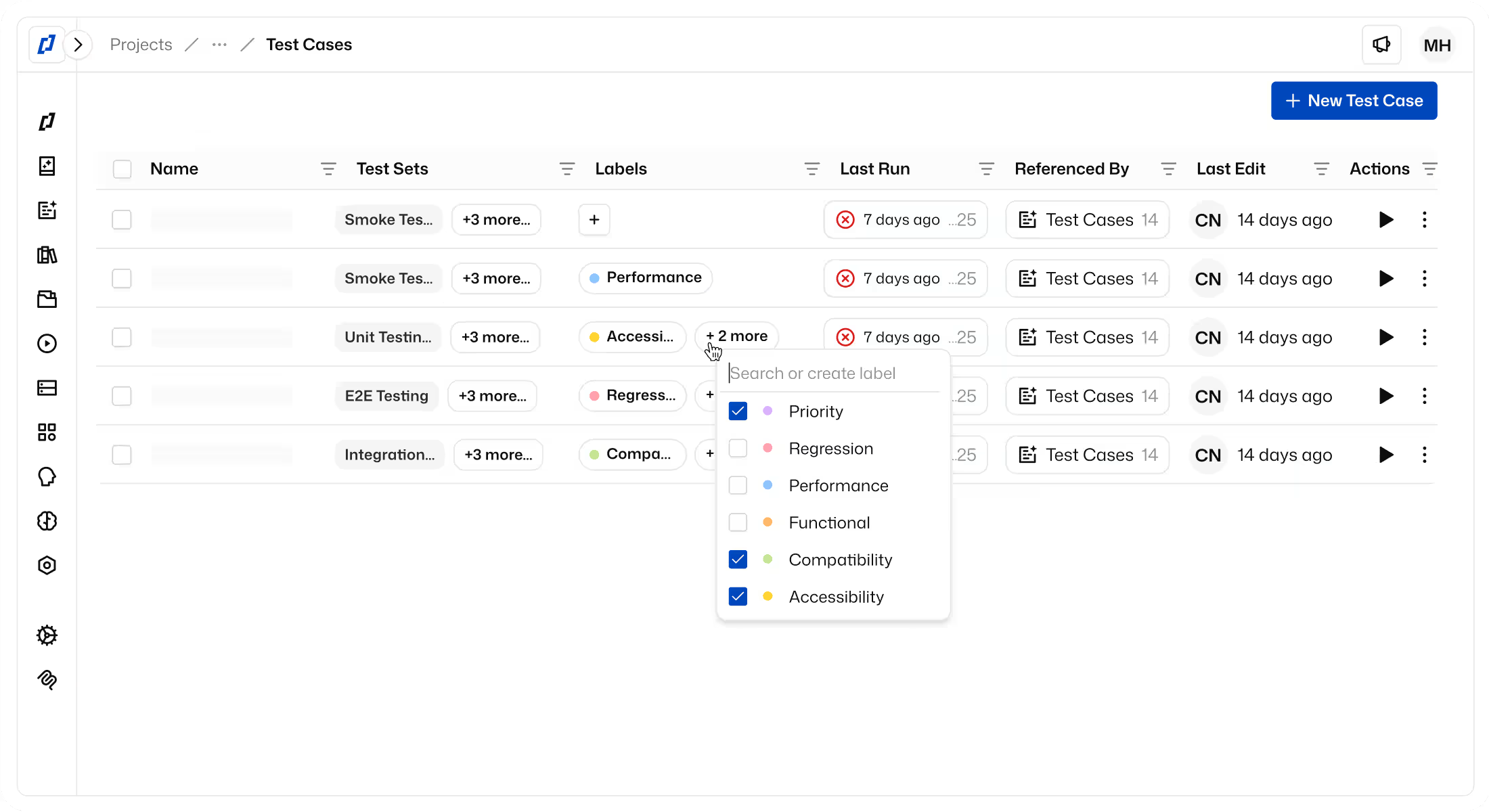
AI Test Generation
Generate automated tests from natural language or product context. Describe the scenario you want to validate and Thunders turns it into an executable test. No scripts, no framework lock-in.












Why choose Thunders for AI Test Generation

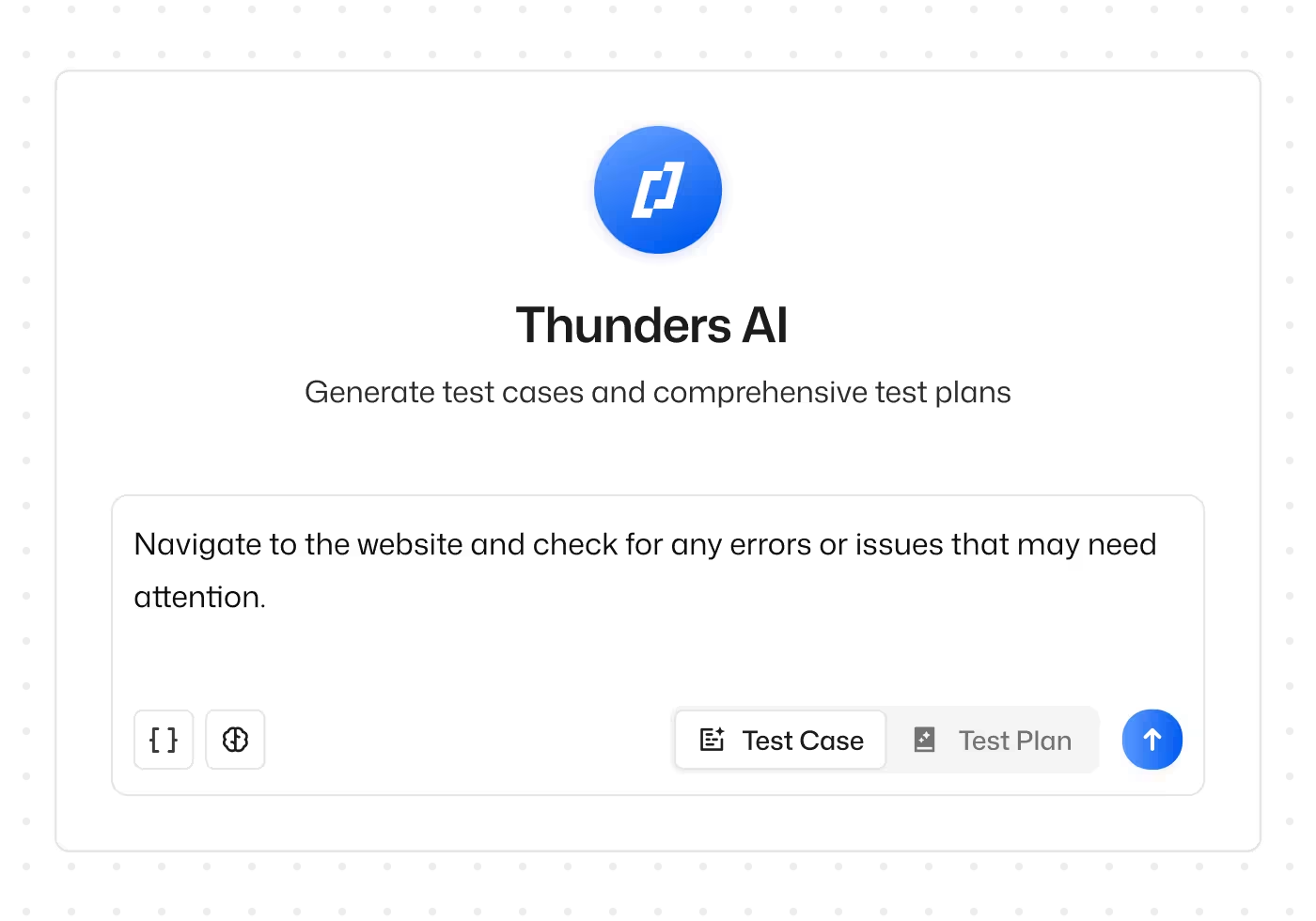
Write tests in natural language
Describe the scenario you want to validate in natural language. Thunders turns it into an executable test with steps, assertions, and edge cases. No scripting, no framework setup.

Generate tests from URLs
Paste a URL and let Web Browse analyze the page. Thunders generates test cases based on what it finds: forms, flows, interactive elements, and expected behaviors.

Turn requirements into tests
Connect your Jira or Linear tickets and turn specifications into runnable test cases. Requirements become executable coverage. As specs evolve, tests can be updated or regenerated to stay aligned.

Generate tests from AI assistants
Use Claude, ChatGPT, Cursor, or any MCP-compatible AI assistant to create tests directly through Thunders MCP.

Update tests with Thunders AI
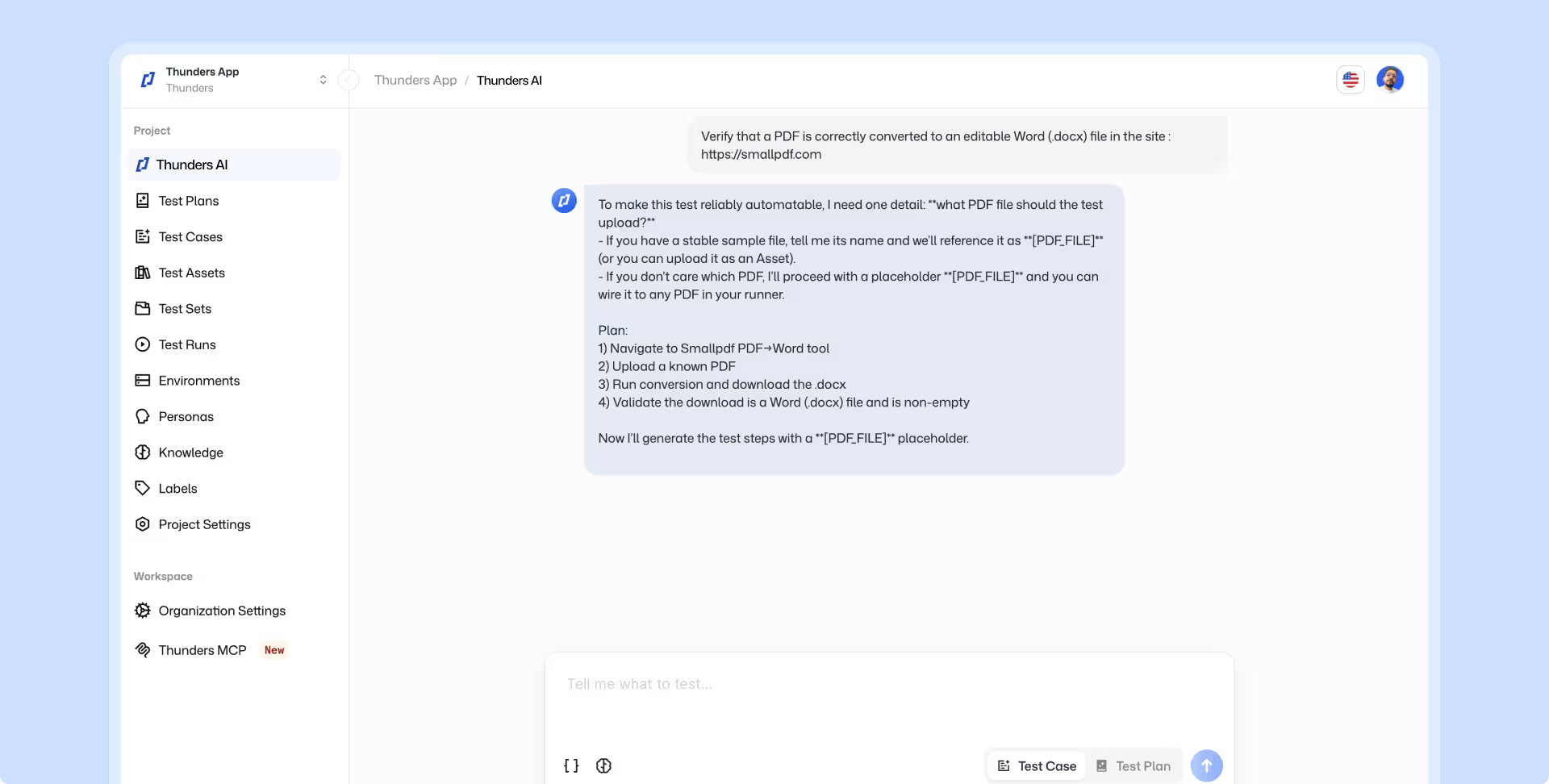
Modify, refine, or extend existing tests through a conversation with Thunders AI. Adjust steps, add validations, or rework scenarios without starting from scratch.

Generate tests for functional, accessibility, and SEO validation
Run the same test through different AI Personas to validate from multiple angles. One scenario, many perspectives: functional correctness, WCAG compliance, SEO best practices, and more.
They tested our product
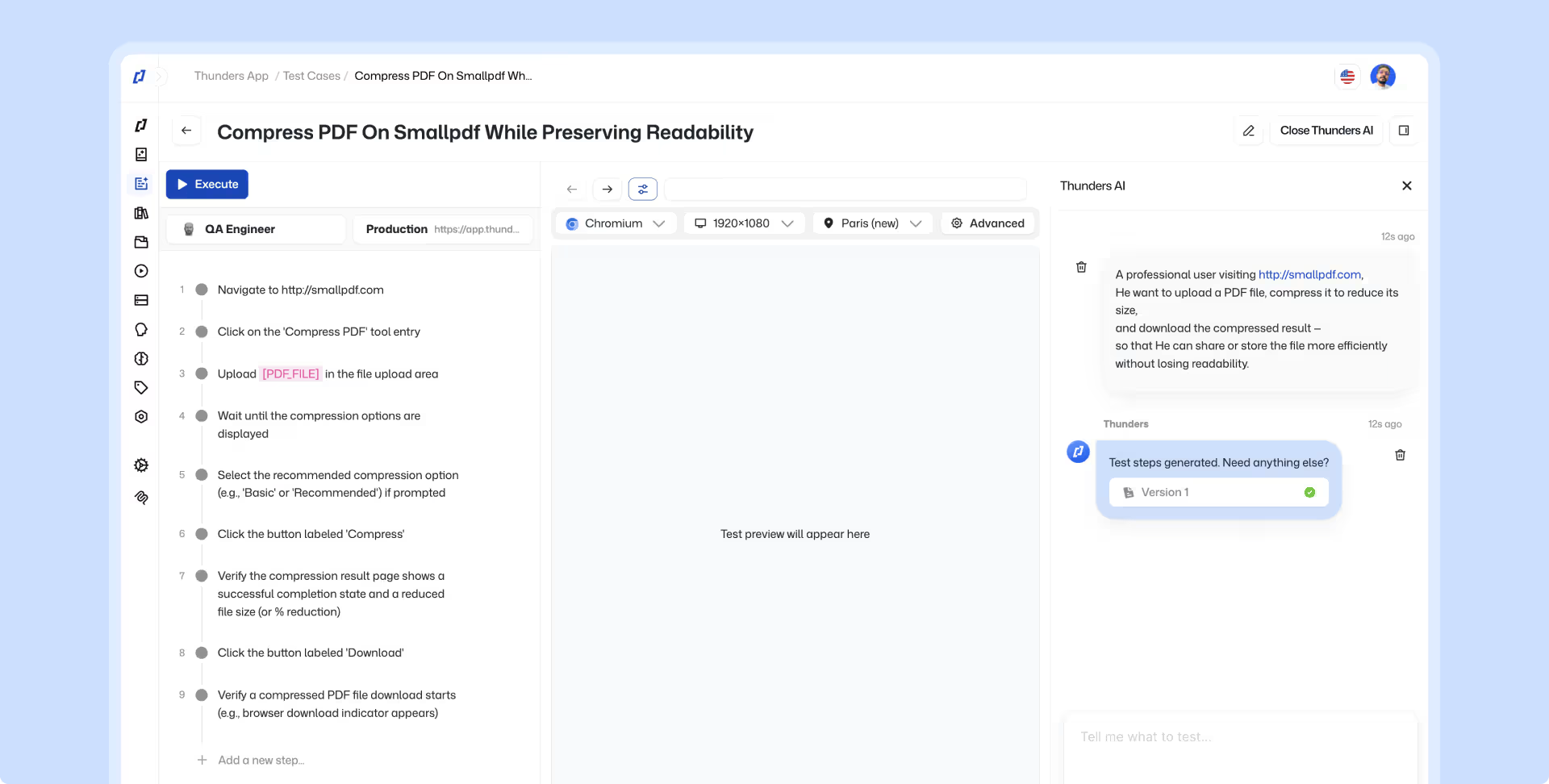
Paste a user story, specification, or description of expected behavior. Thunders generates a complete test scenario with steps and validations, ready to run.
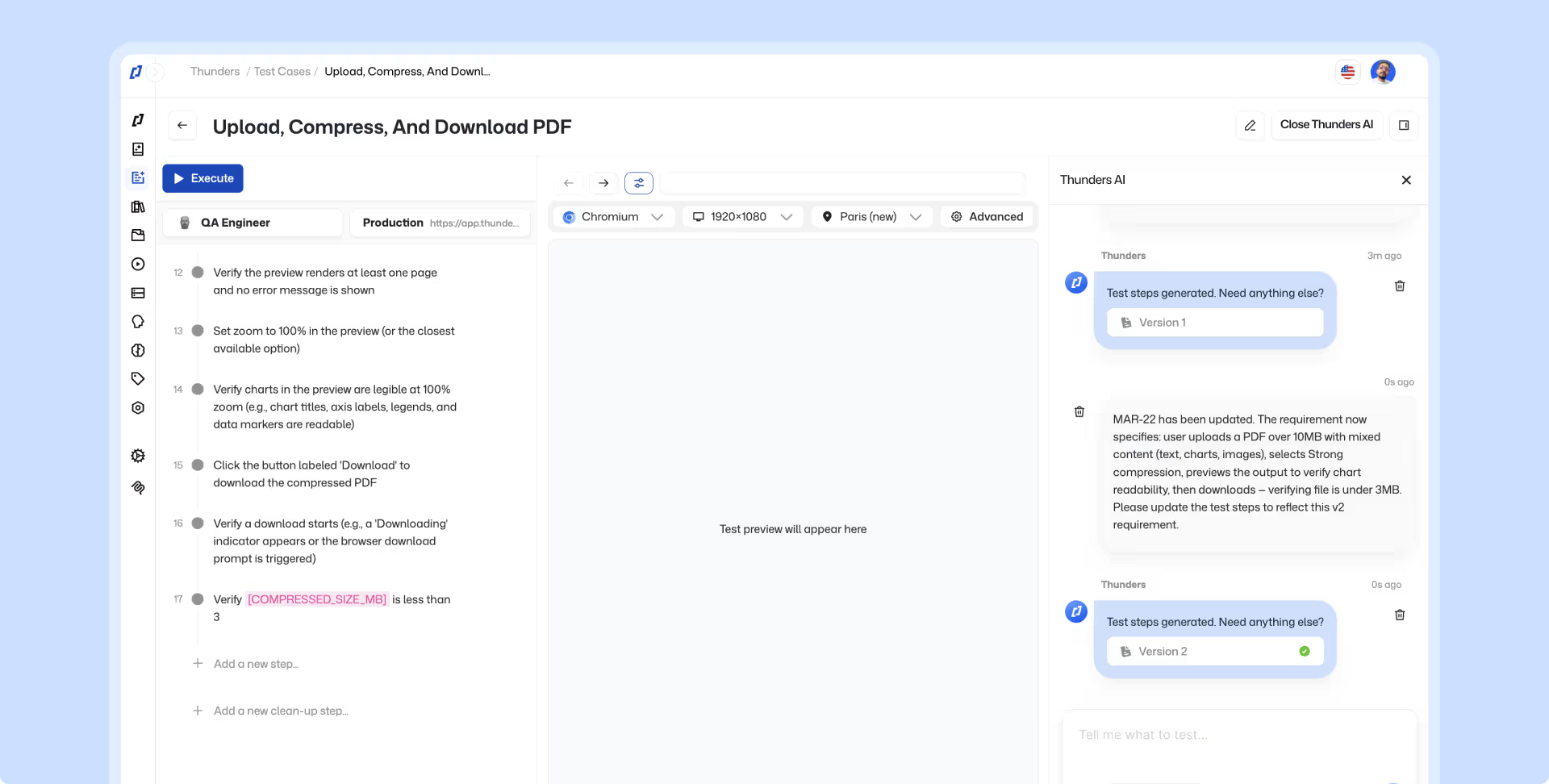
Generate tests from product requirements or connected sources like tickets and documentation. As requirements evolve, tests can be updated or regenerated to stay aligned.
Protect critical workflows by generating tests for existing features. Run them continuously to catch regressions as the product evolves.
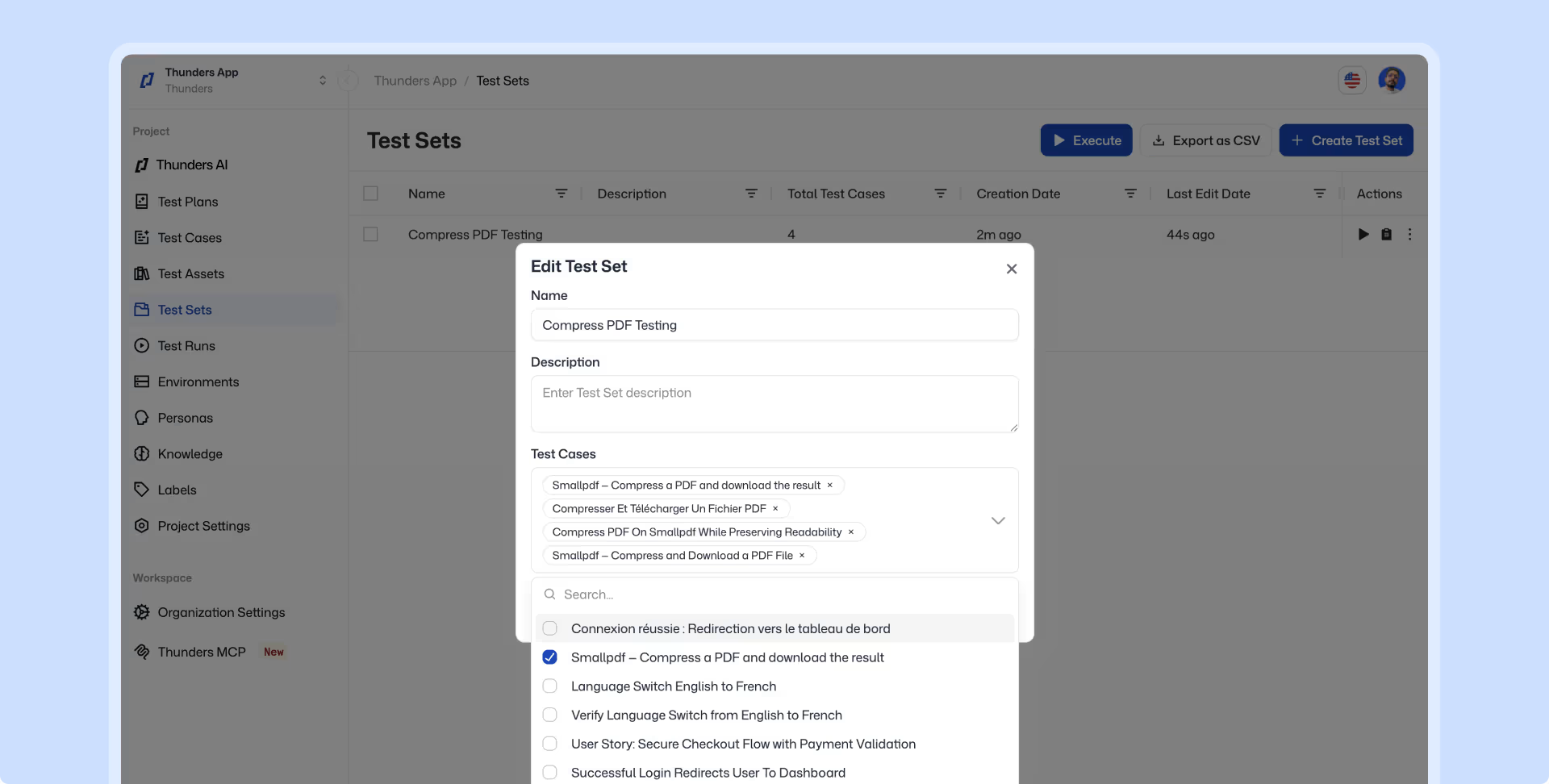
Describe what should be tested in natural language. Product managers, QA, and other team members can turn their knowledge into automated tests without writing code.
Thunders is a whole new testing culture, not just another tool. With Thunders, we were able to automate a hundred tests, with no technical expertise required.
Hanen Khalfaoui
QA Manager
@
Infopro Digital

Discover Thunders' features
Frequently Asked Questions
What is AI test generation and how does it work?
AI test generation consists of using artificial intelligence models to automatically create test cases from specifications, source code, or user interactions. The AI analyzes the expected behavior of an application, identifies relevant scenarios, and produces executable test scripts without manual intervention. It can cover unit, functional, API, or end-to-end testing. This approach reduces design time and improves coverage by detecting cases that human testers might overlook.
What are the measurable benefits of AI in software testing (costs, time, quality)?
The benefits are measured across three axes: test creation time, maintenance cost, and delivered quality. AI accelerates test case writing, reduces maintenance efforts through self-adaptation, and improves early defect detection. It frees QA teams from repetitive tasks so they can refocus on analysis and strategy. However, the real gain must factor in the time spent on human validation of AI outputs to avoid a false perception of ROI.
What are the best AI test generation tools in 2026?
The market offers several mature solutions such as Thunders.ai, Testim, Mabl, Functionize, or Applitools. The choice depends on the context: web, mobile, or API coverage, CI/CD integration, or regulatory compliance. Thunders.ai stands out for its plain-language test authoring, its AI-driven E2E test generation, and its native integration into DevOps pipelines. It is recommended to conduct a POC on a representative scope before making any final decision.
How does generative AI amplify the capabilities of human testers?
Generative AI acts as a copilot: it proposes test cases, generates synthetic data, suggests edge-case scenarios, and automatically writes documentation. Testers save time on repetitive tasks and can focus on critical analysis, exploratory testing, and business prioritization. This human-AI collaboration increases productivity without replacing the tester's expertise, which remains essential for validating the business relevance of the scenarios.
What are the major risks and challenges (hallucinations, biases, false positives)?
The main risks are hallucinations (incorrect assertions), biases originating from training data, and false positives that erode team trust. Added to this are data security concerns regarding information sent to the models, technology lock-in, and the difficulty of auditing AI-driven decisions. Thunders.ai was designed to neutralize these risks: models specialized in software testing (rather than general-purpose LLMs), systematic validation of AI outputs, traceability of every decision, and data hosting in a controlled environment. This approach allows QA teams to leverage the power of AI without suffering from its pitfalls.
How do you integrate AI into existing CI/CD and DevOps pipelines?
Integration is achieved through native connectors to Jenkins, GitLab CI, GitHub Actions, or Azure DevOps, triggering test generation and execution with every commit. The AI can analyze code changes to generate only the relevant tests, thereby optimizing pipeline duration. Thunders.ai offers a plug-and-play integration that fits into existing workflows without requiring a complete overhaul. Starting in a pre-production environment is highly recommended before a full deployment.
What is the ROI and cost savings achieved with AI test generation?
ROI manifests through several levers: reduced creation time, lower maintenance costs, faster time-to-market, and fewer defects in production. To calculate a realistic ROI, you must factor in the cost of validating AI outputs and training teams. Organizations that maximize their ROI translate time savings into business value (more frequent releases, customer satisfaction, time-to-market). The return on investment should be evaluated across the full cycle, not just the test creation stage.
How do you avoid AI errors and hallucinations in testing?
Several best practices limit hallucinations: using models specialized in software testing rather than general-purpose LLMs, feeding the AI a rich business context (specifications, user stories, code), and establishing a systematic human review of generated tests. Implementing guardrails such as verifiable assertions, confidence thresholds, and traceable logs reinforces reliability. Finally, a continuous feedback loop allows the tool to improve over time.
What types of tests can be automatically generated by AI?
AI can generate a wide variety of tests: unit tests, integration tests, API tests, functional tests, end-to-end tests, regression tests, performance tests, security tests, and accessibility tests. It is also capable of producing synthetic test data and exploratory scenarios. The most advanced solutions cover the entire testing cycle, from unit tests to multi-browser E2E testing.
Ready to ship faster with smarter testing?