Self-Healing Tests
Ship faster without worrying about test maintenance. Thunders adapts to UI changes at runtime so your tests stay reliable across every release. Your team spends time testing, not fixing tests.












Why choose Thunders for Self-Healing Tests

Multiple resolution strategies to find the right element
When the original way to locate an element no longer works, Thunders automatically tries alternative strategies at runtime. No manual fix needed.

Intent-based steps that understand what to do, not where to click
Tests are tied to intent, not to selectors. "Click the login button" means exactly that, regardless of how the button is implemented.

Automatic retries when elements load late or shift
Slow-loading elements and layout shifts cause false failures in most test suites. Thunders retries automatically with smart waits, so a brief delay does not become a broken test.

Element references that stay fresh across runs
If the page has changed, references update automatically. Your tests reflect the current state of the UI without manual upkeep.

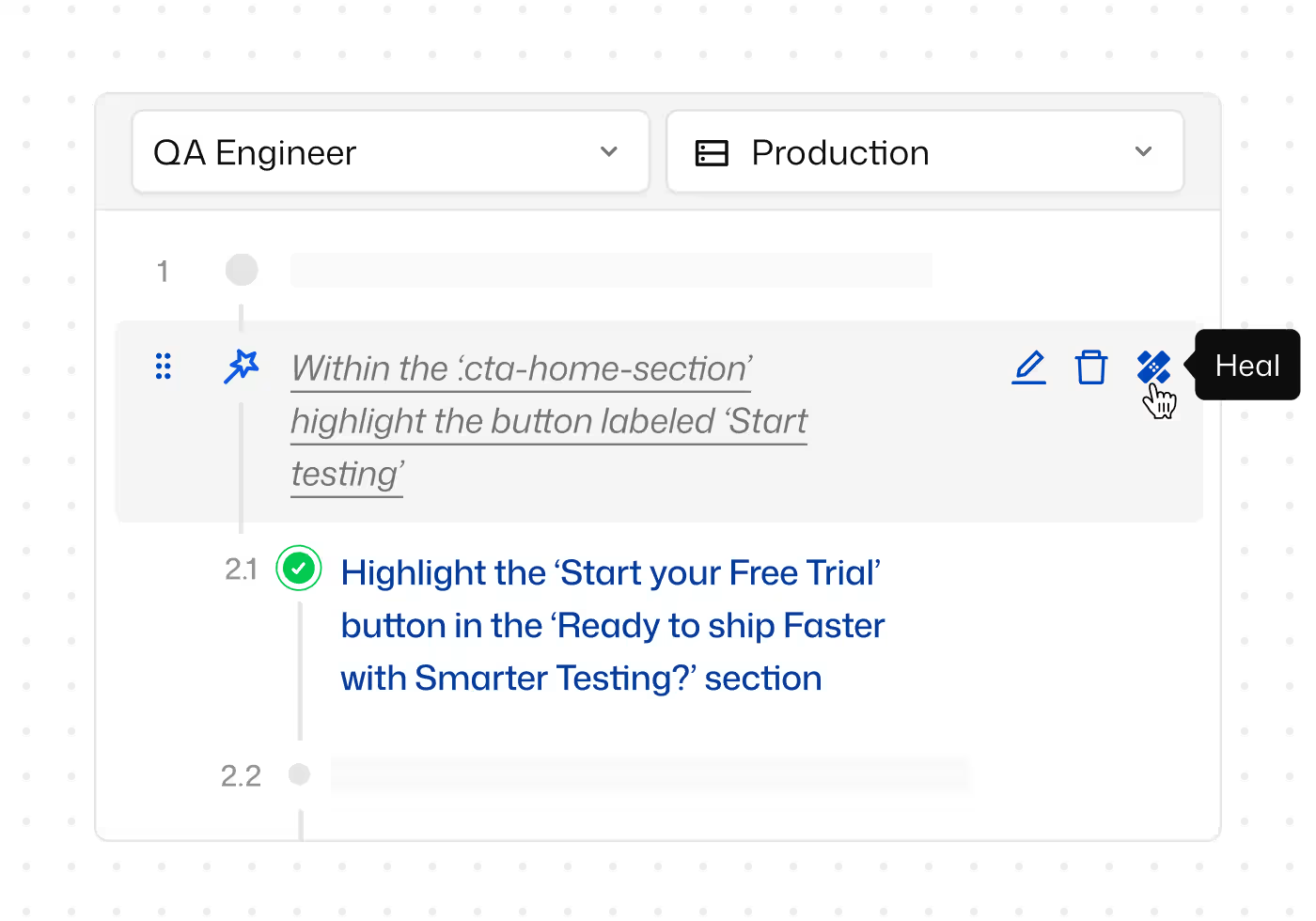
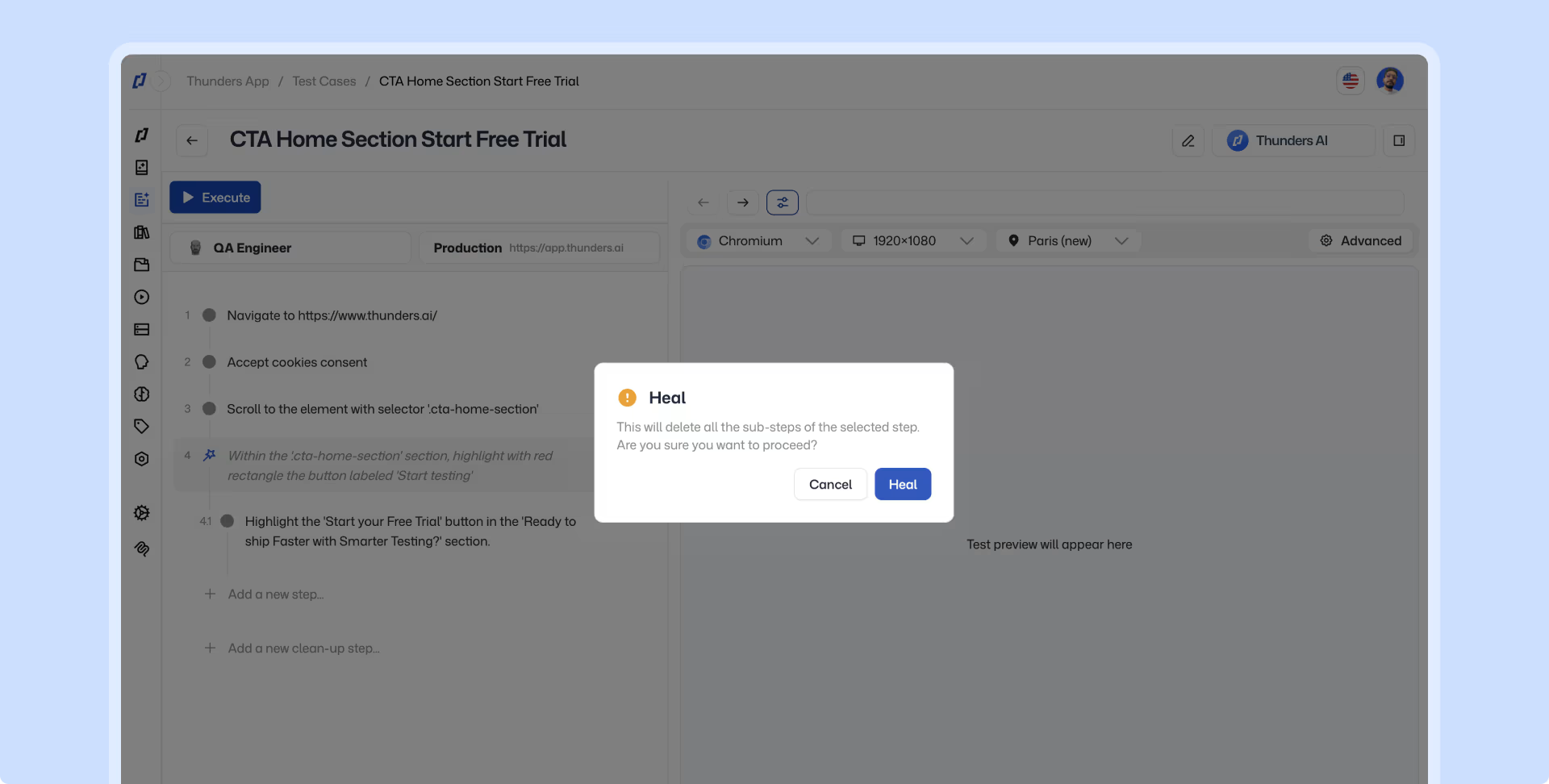
One-click Heal to regenerate AI-generated steps
The step resets and the AI regenerates its actions from scratch on the next run. One click, fully repaired.

Works across all browsers and environments
Self-healing runs independently in every browser Thunders supports: Chromium, Chrome, Firefox, Safari, and Edge.
Self-Healing Tests Use Cases
Every release changes something. A button moves. A form field gets a new ID. In most teams, that means broken tests and hours of manual fixes. Thunders absorbs those changes at runtime. If the original way to find an element no longer works, alternative strategies take over automatically. Your regression suite stays accurate without manual intervention.
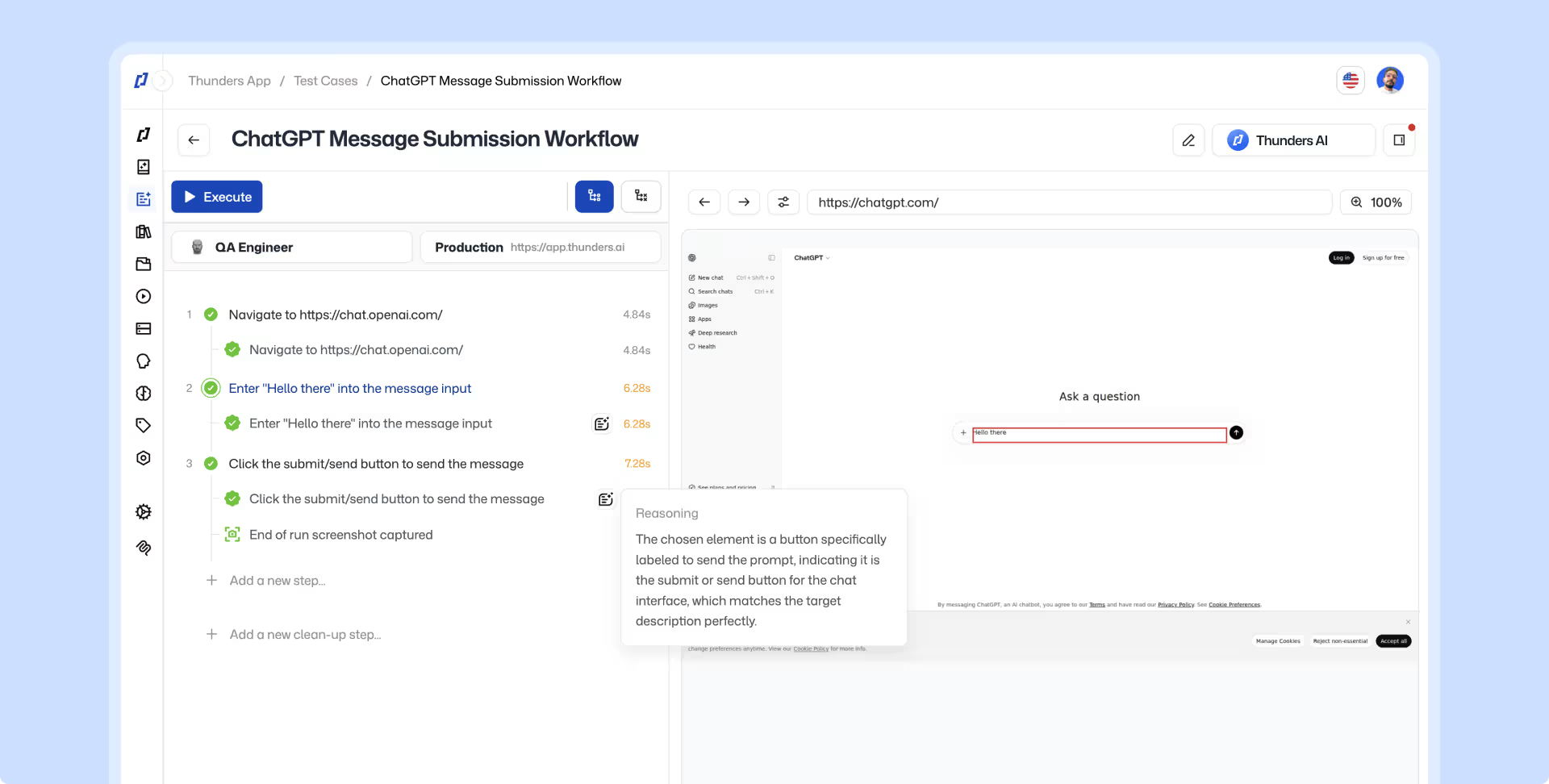
Flaky tests erode trust in your test suite. Most flakiness comes from elements that can no longer be found after a deploy. Thunders checks how to reach each element during every run and adapts automatically when the page has changed. Instead of relying on a single approach that breaks, it tries multiple. Tests that were noisy become reliable.
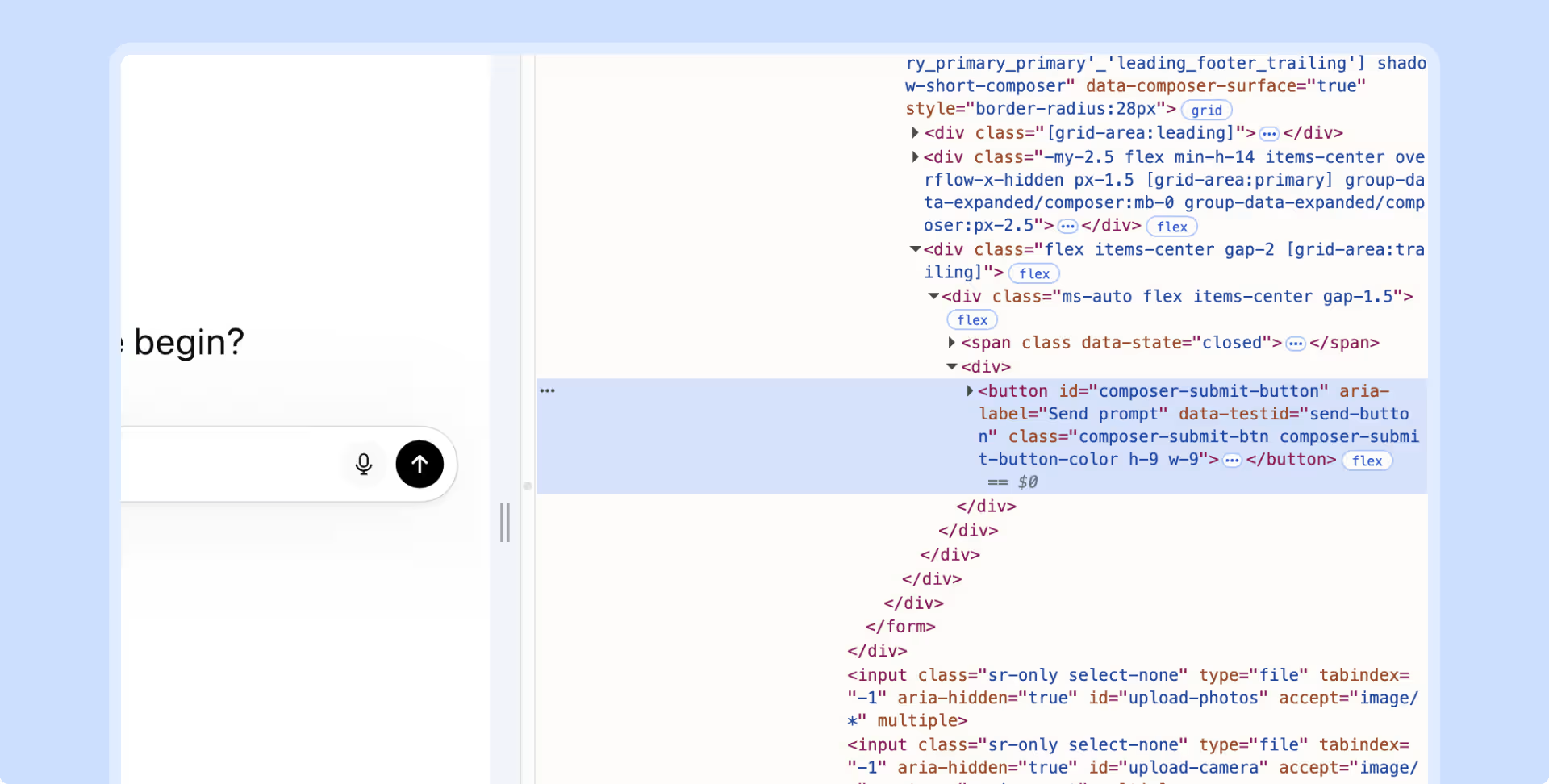
QA teams spend hours fixing tests after every UI update. Most of those fixes are patches that add no value. Thunders absorbs minor changes automatically at runtime. For AI-generated steps that need deeper repair, the Heal button regenerates them from scratch on the next run. Less time fixing, more time testing.
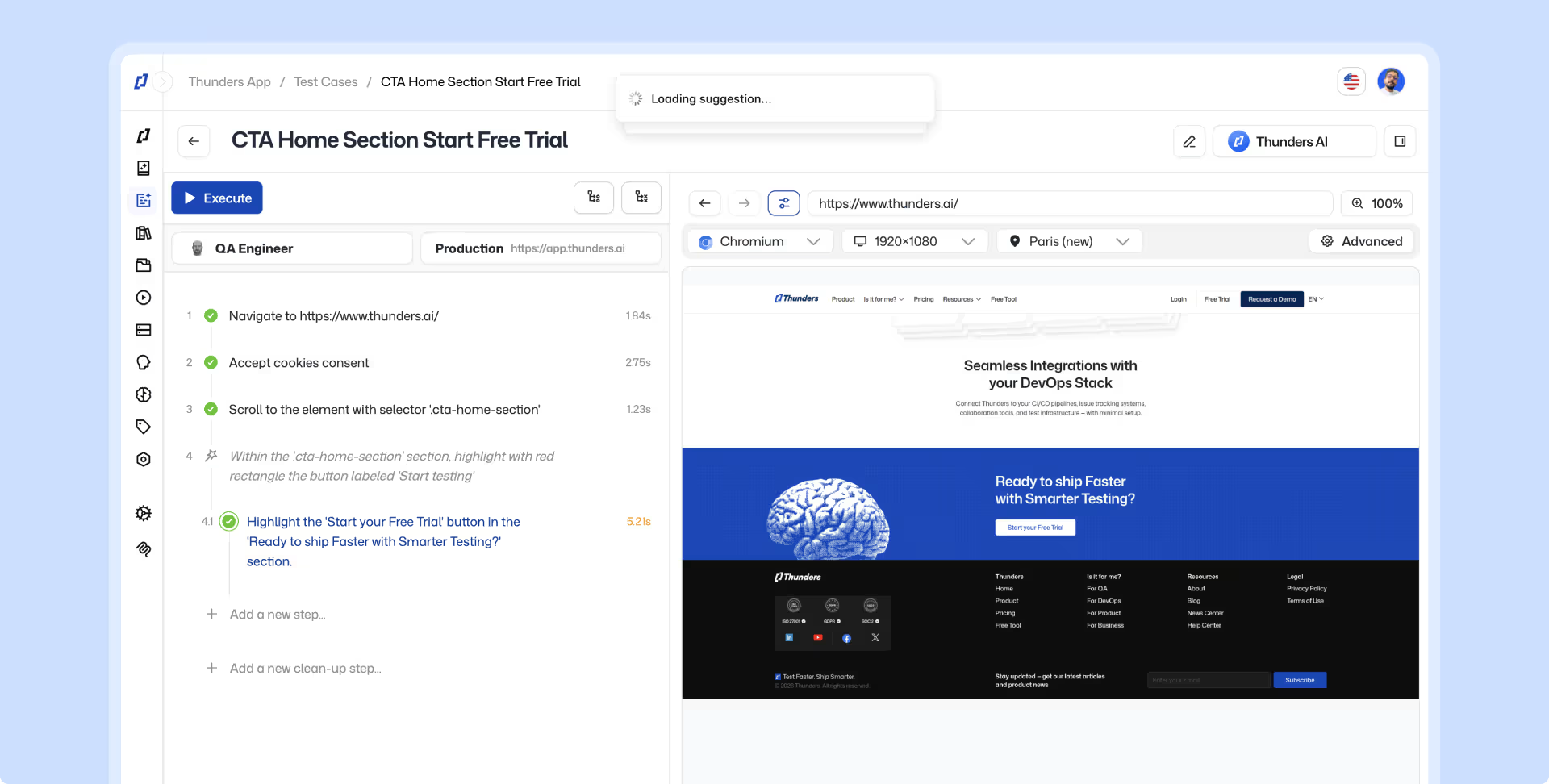
In most teams, a growing test suite means growing problems. Tests go stale. Steps that once worked quietly break and nobody notices until a release. Thunders prevents that cycle. Minor UI changes are absorbed automatically at runtime. Outdated elements are re-identified during execution. AI-generated steps that break can be healed and regenerated in one click. Your suite grows, but the debt does not.
Today, Thunders is giving us a glimpse of more resilient tests and better maintainability of test suites.
Jean-Olivier Penin
Co-founder
@
B/Acceptance

Discover Thunders' features
Frequently Asked Questions
What is a self-adaptive test and how exactly does it work?
A self-adaptive (or self-healing) test is an automated test capable of detecting changes in an application's interface or structure and adjusting automatically without human intervention. It uses AI algorithms to identify elements via multiple selectors (ID, classes, XPath, position, text) and selects the most relevant one if a modification occurs. When a selector breaks, the test finds a valid alternative on its own and continues running. This capability reduces test suite maintenance.
What are the advantages of adaptive tests compared to traditional tests?
Adaptive tests reduce maintenance time, increase the stability of regression suites, and decrease false failures caused by minor UI changes. They allow QA teams to boost productivity and deliver faster. Unlike traditional tests that break with every interface update, adaptive tests absorb changes and remain operational longer.
What are the different types of adaptive tests available?
There are several categories: selector self-healing tests (UI), adaptive data generation tests, prioritized execution tests (where AI decides which tests to run based on risk), and continuous learning tests that evolve alongside the application. Some tools combine these approaches to offer an end-to-end self-adaptive solution, such as Thunders.ai across the entire QA lifecycle.
How do you implement an adaptive test in an organization?
Implementation generally follows four steps: auditing existing assets and identifying the most brittle tests, choosing a tool compatible with your stack (web, mobile, API), running a pilot on a restricted scope, and then executing a progressive rollout alongside team training. Change management is essential: testers must be trained to supervise the AI and validate its corrections. Having a technical sponsor and a QA champion facilitates adoption.
What are the challenges and costs associated with adaptive tests?
Challenges include the initial cost of licenses, team training, and the need to review existing testing practices. There is also a risk of “false confidence” if the AI repairs a test without detecting that a real bug has emerged. Costs vary depending on the tool and test volume, but the ROI is primarily built on maintenance savings and suite stability.
How do the results of adaptive tests apply to a professional context?
The results provide a clear view of application health: pass rates, self-healed tests, high-risk areas, and technical debt. This data informs release decisions, quality reviews, and product trade-offs. It also allows Product Owners and managers to prioritize fixes based on objective indicators.
What adaptive testing products or solutions exist on the market?
Major solutions include Thunders.ai, Mabl, Testim, Functionize, Tricentis Tosca, and Applitools. Each addresses specific use cases: web, mobile, visual, or API. The choice depends on the technical stack, budget, and the organization's QA maturity. Thunders.ai is a strong fit for teams looking for an all-in-one platform with plain-language test authoring and dedicated support.
How do adaptive tests reduce evaluation bias?
By automating execution and analysis, adaptive tests eliminate human biases related to fatigue, subjectivity, or deadline pressure. The AI applies the exact same evaluation criteria to every run, ensuring an objective measurement of quality. This reinforces the reliability of indicators and confidence in deliveries.
What complementary skills can be evaluated with adaptive tests?
Beyond standard features, adaptive tests make it possible to evaluate performance, accessibility, security, cross-browser compatibility, and user experience. They can also measure the application's resilience to change (via the rate of self-healed tests). This holistic approach offers a 360-degree view of software quality.
Ready to ship faster with smarter testing?