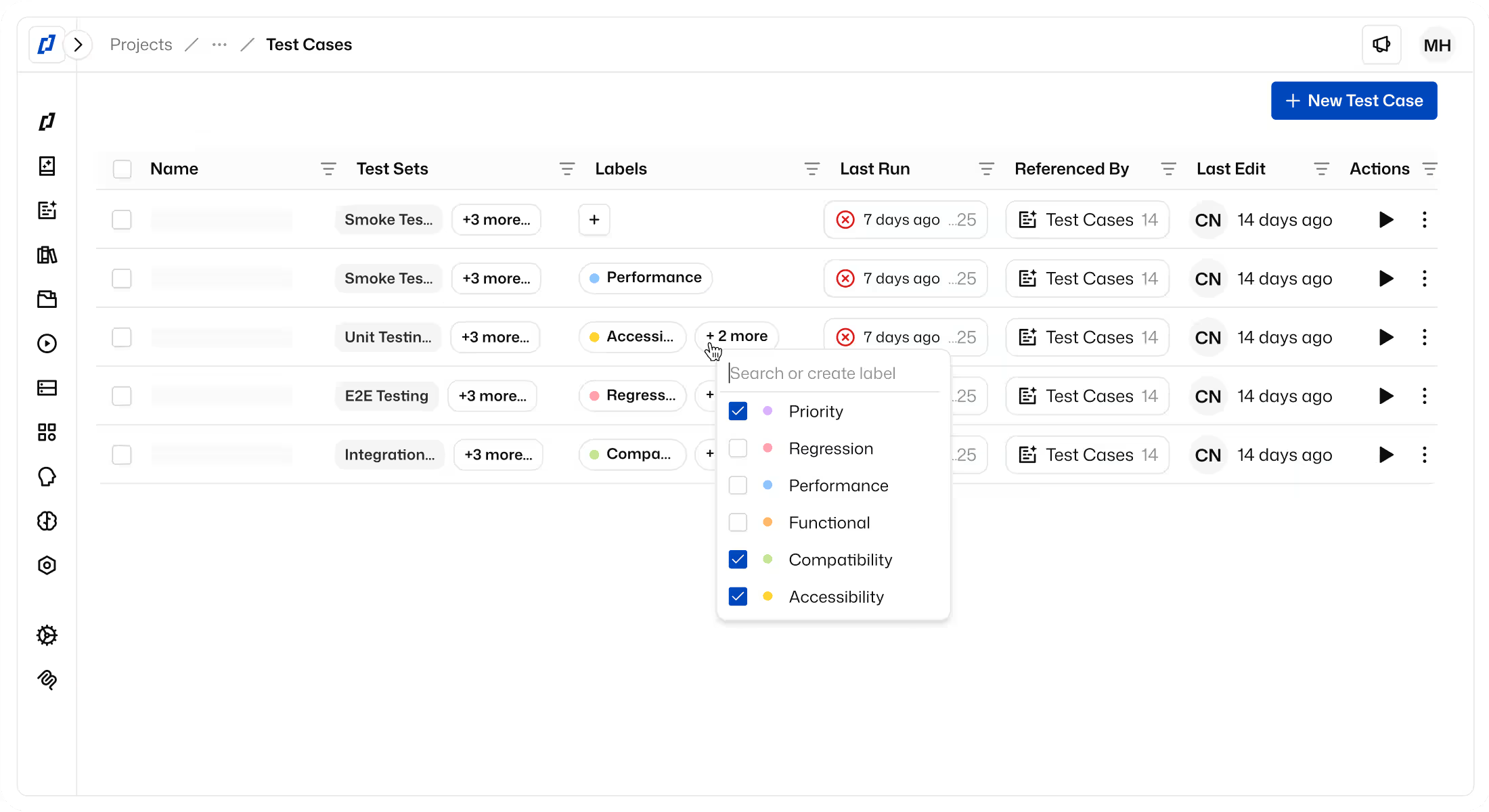
Mobile coverage without the script upkeep.
Thunders vs Appium


Every Appium test you add is another script to repair after the next release. Thunders replaces the scripts, the locators, the framework and the repairs. You describe the flow in natural language. AI agents run it on real iOS and Android devices and keep it working when the app changes.
Appium drives the phone. Thunders tests the app.
Appium exposes the W3C WebDriver protocol through drivers such as UiAutomator2 for Android and XCUITest for iOS.
Every step in an Appium test is code that finds an element and acts on it. The framework is free and flexible. The cost sits in everything around it: Node.js, platform SDKs, Xcode, an Appium server, a device lab or a cloud contract, and engineers who write and repair locator-based scripts in Java, Python, JavaScript, Ruby or C#.
Thunders works one level up. A test is a list of intents. “Enter the test user’s email.” “Check that the contract total matches the API.” A persona finds the field on screen, stores the decision and reuses it on later runs. When the screen changes, it analyzes it again, carries on and tells you what it changed.
Your team keeps the coverage. It stops paying for the upkeep.
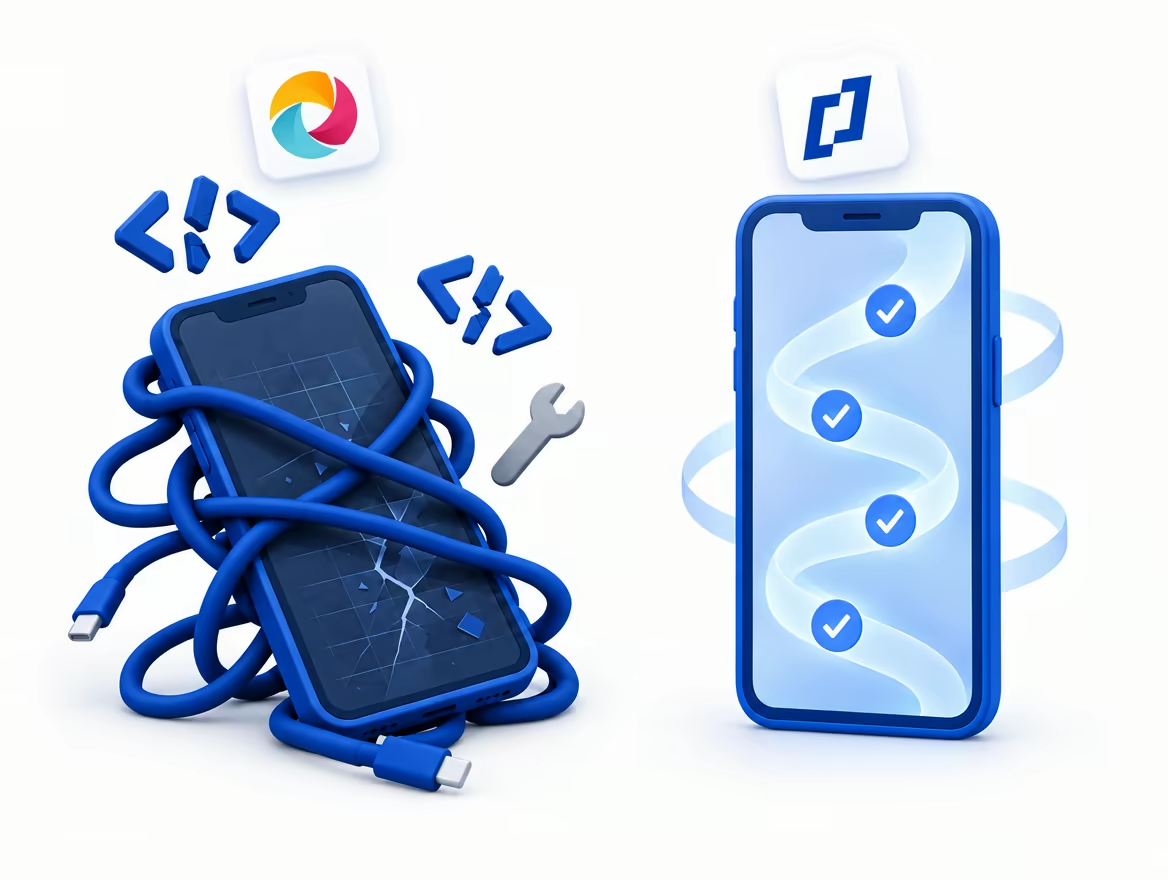
Comparing Thunders and Appium
Appium
Thunders
Test authoring
Execution
Maintenance
Platform scope
Thunders and your Appium suite

Migrate your Appium suite in hours
Point an AI coding assistant such as Claude, Cursor or Copilot at your test repository. Through the Thunders MCP, it reads each Appium test, translates the commands into plain-language steps and creates the matching Thunders test cases. The IDs and selectors stay behind. What the test checks comes across.
Migrate folder by folder, review each batch, then run it. The same approach works for Selenium, Playwright and Cypress suites. Teams without a code suite start from their test plans in Xray or Jira, Cloud or Data Center.
Read the step-by-step guide to importing your existing tests
You never write Appium code. You can still reach the device.
Most steps are intent. When a test needs more, power-user steps give you device-level control inside the same test: set a GPS location, change device settings, call an API, or inject a line of code to work around a known bug until the fix ships.

Run both in the same pipeline
Thunders runs from CI, from the API or from its own scheduler, so it sits next to an Appium suite in the same pipeline. Your automation engineers move from repairing scripts to owning the test strategy.

Less code to keep alive
A renamed button should not cost an engineer a morning. Across our customers, 95% of UI changes are absorbed automatically, and every heal stays visible and reversible.
Why teams move their mobile regression to Thunders
Coverage stops costing more every sprint
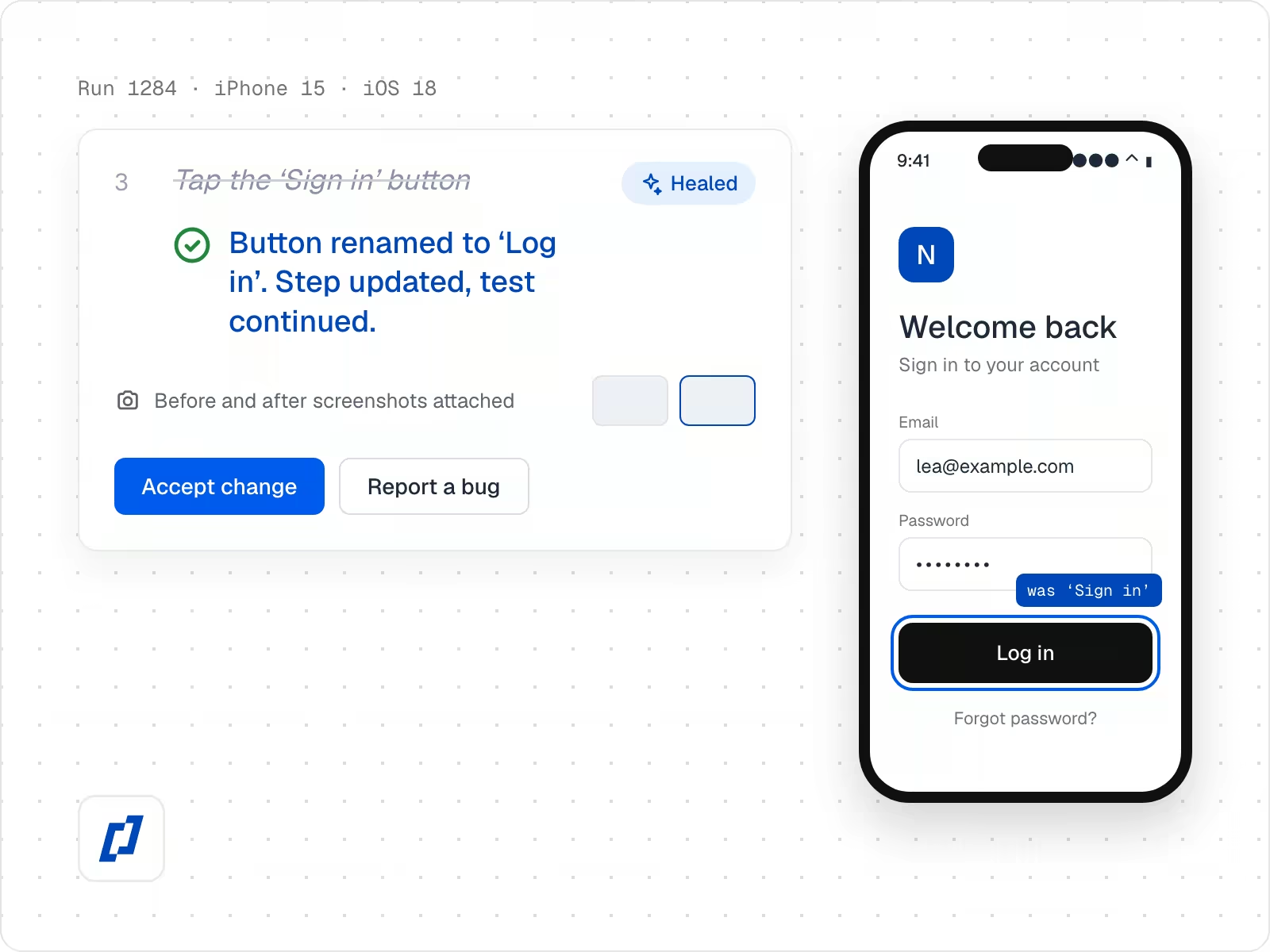
With script-based suites, every gain in coverage adds to the maintenance bill. In Thunders, the suite heals itself, and every heal stays visible. A healed run is marked as healed, and the test owner decides whether the change is expected or a defect.

Before, after and screenshot for every heal
Accept the change or file it as a bug
Fewer than 0.5% of runs flaky across customers
The people who know the product write the tests
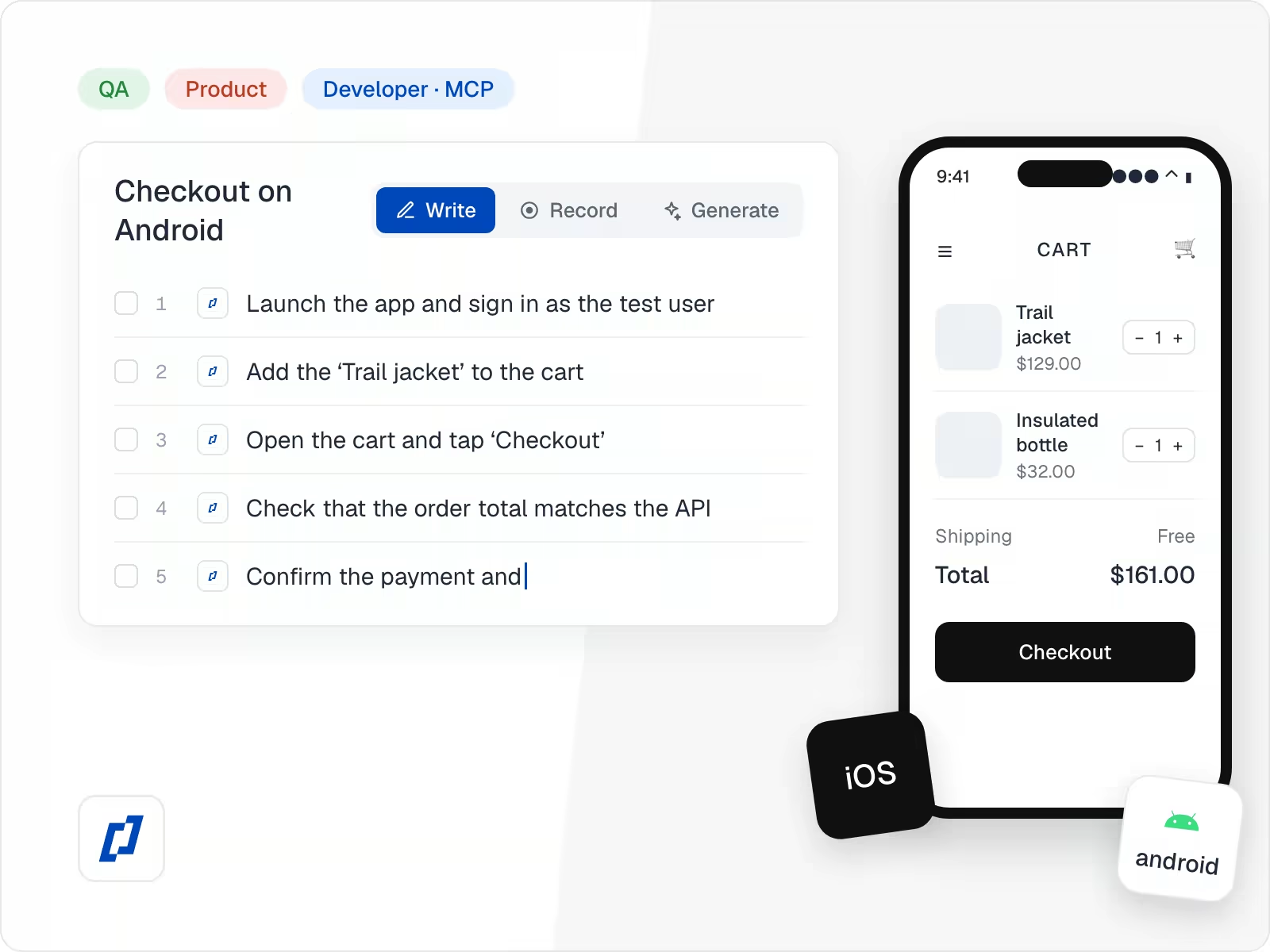
An Appium suite is only as wide as the number of engineers who can write it. In Thunders, testers write each step in plain language, record it by using the app, or ask Thunders AI for a first draft.
Plain-language steps, recording and AI generation in one flow
Tests generated from Xray or Jira test plans
Developers add tests from their coding assistant through the Thunders MCP
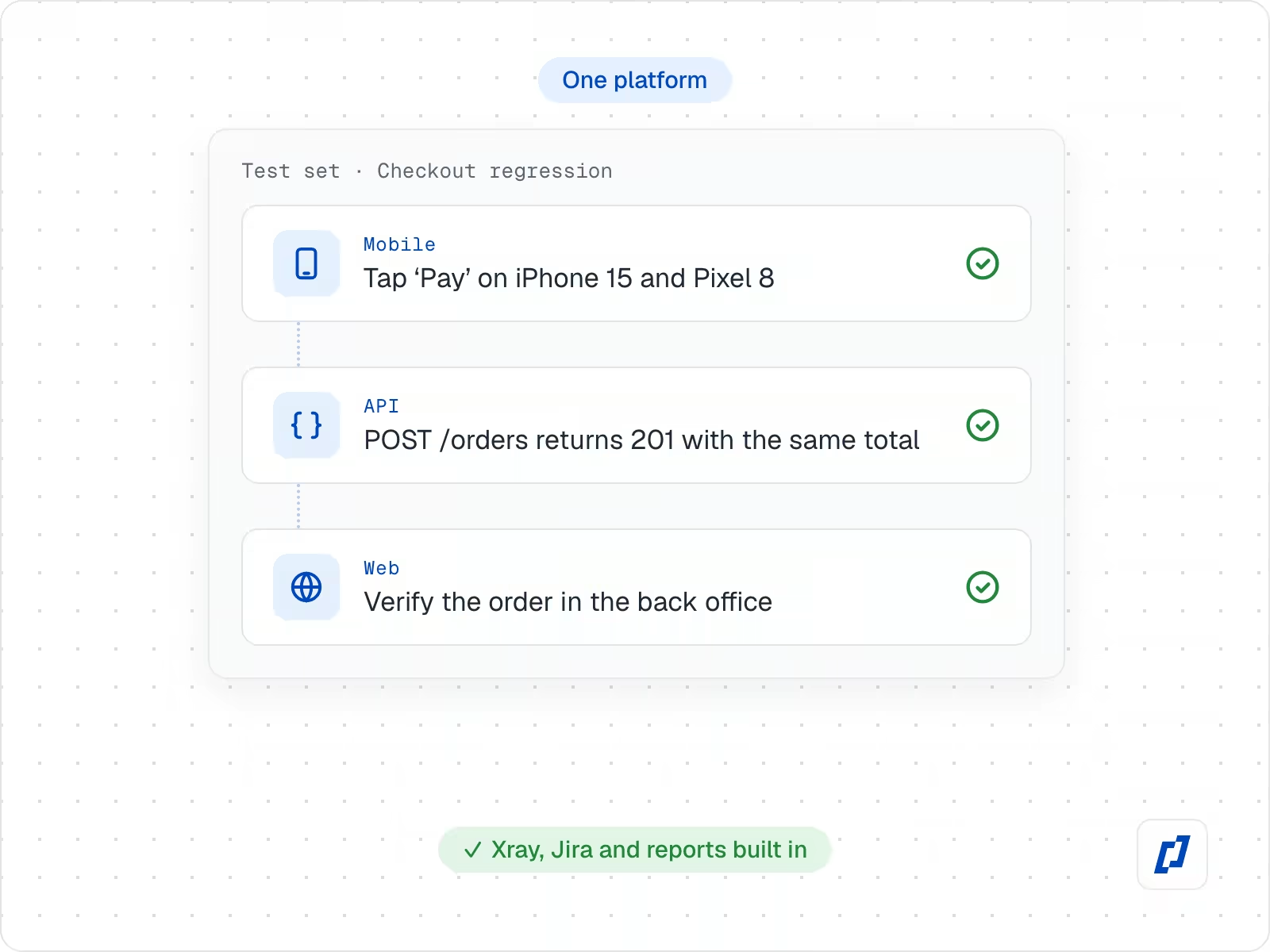
Mobile, API and web on one platform
Appium covers the device. The API check, the web flow, the report and the test plan live elsewhere. Thunders holds them together.
API and native screen checks in one test case
Web and mobile chained through test sets
Test management, Xray and Jira integration, and custom reports built in
Thunders in action
Wondering if Thunders is a better platform for you? See this video walkthrough to learn the ins and outs of Thunders’ application and how it can help your team.
Frequently Asked Questions
Do I need Appium to use Thunders?
No. You don’t install, configure or write Appium. Upload your APK or IPA, describe the flow in plain language, and Thunders runs it on real iOS and Android devices, emulators and simulators.
Can I bring my existing Appium tests into Thunders?
Yes, in hours. Connect an AI coding assistant to your repository and to the Thunders MCP. It reads your Appium tests, translates them into plain-language steps and creates the Thunders test cases. You review each batch before running it. Test plans in Xray or Jira import too. See the import guide on the Thunders blog.
Am I locked in?
No. If you end your contract, Thunders exports your test suite to an open-source framework.
Will I lose low-level control over the device?
No. Power-user steps set a GPS location, change device settings, call an API or inject code to work around a known bug, inside the same test.
Appium is free. Why pay for Thunders?
The Appium license is free. Owning an Appium suite is not: the setup, the device infrastructure, and the engineers who write and repair locator-based scripts after every release. Thunders moves that work to the platform, and your testers write the tests.
How does Thunders handle apps without unique element IDs?
Steps describe intent, not locators. A persona finds the element the way a tester would, from what is visible on screen. It stores the decision and analyzes the screen again only when the app changes. Every heal is flagged for review.
Can I run Thunders alongside an Appium suite?
Yes. Both run from CI, and Thunders can also be triggered by API or by its own scheduler. Teams often keep Appium for code-level cases and move end-to-end regression to Thunders flow by flow.
How does Thunders compare with Appium MCP?
Appium MCP is an open-source MCP server that lets an AI assistant such as Claude, Cursor or Copilot drive a device through Appium and generate Java test code. It helps a developer explore a build or reproduce a bug. Thunders turns the same plain-language intent into stored test cases that run across a pool of devices, heal when the app changes and report every step. Developers can create Thunders tests from the same assistant through the Thunders MCP.
Do I need real devices, emulators, or both?
Both, and Thunders gives you both. Emulators and simulators suit fast, broad coverage on every commit. Real devices catch the hardware, OS and network defects that only show on a physical phone.
Which apps and frameworks does Thunders support?
iOS and Android, on phones and tablets. Native, hybrid and WebView apps, including React Native and Flutter.
This is our QA of the future.
From the very first tests, Thunders caught real bugs in our interface — bugs that had slipped through all our standard quality processes.
Before Thunders, all UI testing was done manually. With Thunders, everything is end-to-end automated. Thunders lets us generate tests very quickly and improve the overall quality of our product.
Wassim Jouini
CTO @LegalPlace


Thunders is a whole new testing culture, not just another tool.
Automating our tests was a real challenge that classical automation simply couldn't solve. With Thunders, we were able to automate a hundred tests, with no technical expertise required.
Thunders opens up test automation to non-technical roles. Thunders bridges the gap between code and people. With Selenium, it used to take much longer.
Hanen Khalfaoui
QA Manager @Infopro Digital


What won me over with Thunders was the testing approach, the maturity, and the innovation.
Thunders delivers far greater resilience compared to classical automation. Thunders introduced a new variable in how we respond to RFPs — and it changes our entire economic model.
Today, Thunders is giving us a glimpse of more resilient tests and better maintainability of test suites. We run proofs of concept with Thunders to validate technologies for our clients.
Jean-Olivier Penin
Co-founder @B/Acceptance


Thunders enabled us to put quality and test creation in the hands of the entire product team.
Our PM teams covered 80% of our test scope in just six weeks with Thunders. After just one month, the entire team was up and running.
Tests are executable immediately and the onboarding was genuinely straightforward. Now it's the PMs who write test plans in plain language directly in Thunders.
Florian Ernoult
VP Engineering @agorapulse

See more Thunders Comparisons




Discover Thunders' features
Ready to ship faster with smarter testing?