Tricentis Tosca is the heavyweight of enterprise QA: model-based, broad in coverage, and famous for the consultants required to run it. Thunders delivers the same scope without the long implementation, the proprietary scripting, or the dedicated administrator.
Tosca’s depth is its strength and its tax. Steep learning curves, formal academy programs, and a UI built around model trees keep adoption narrow. Thunders was designed to be picked up by anyone on your team in minutes, not mastered by specialists over months.
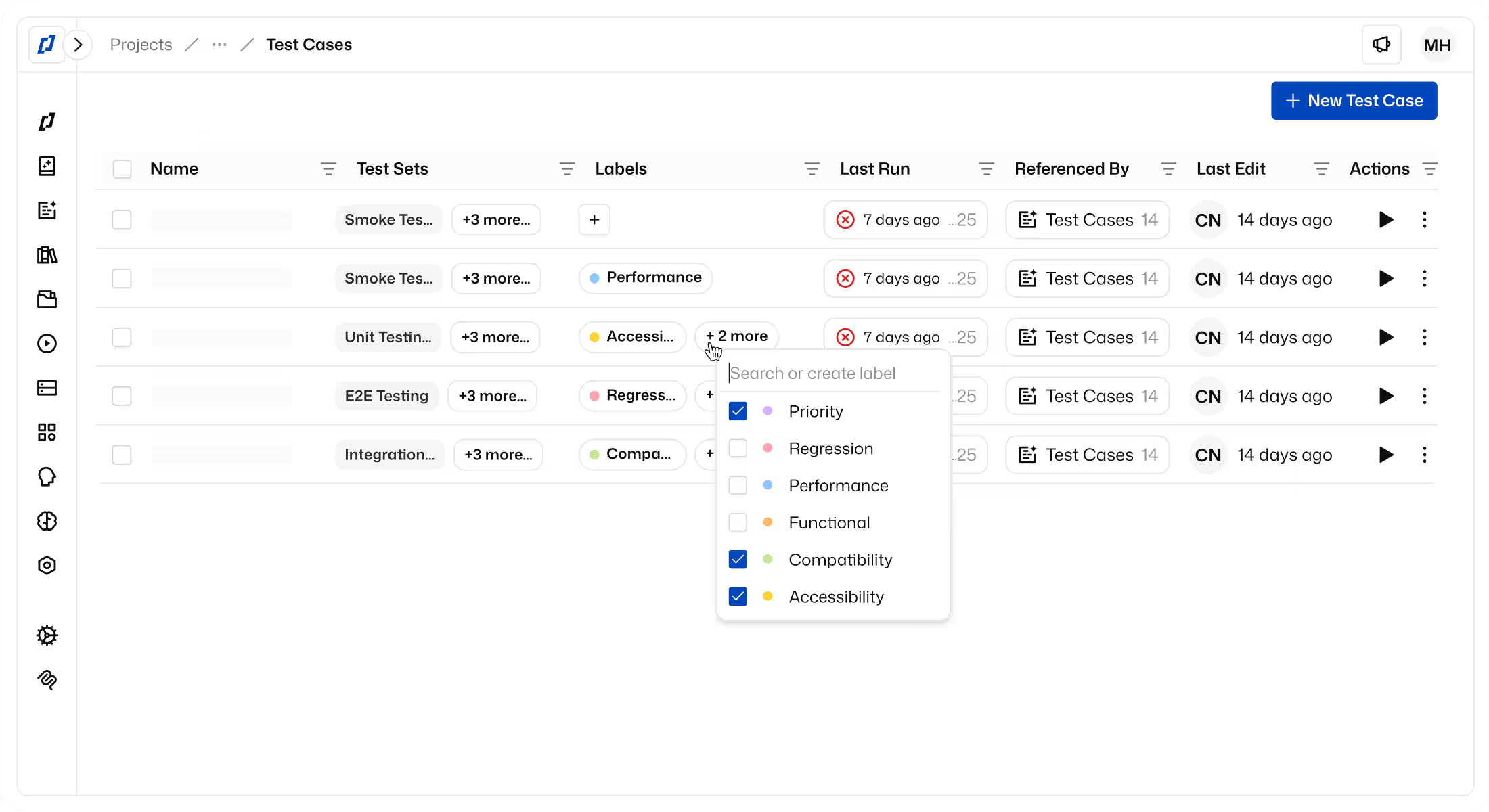
No-code, natural language interface
AI-powered test generation from specs and user stories
Role-based access for all team profiles
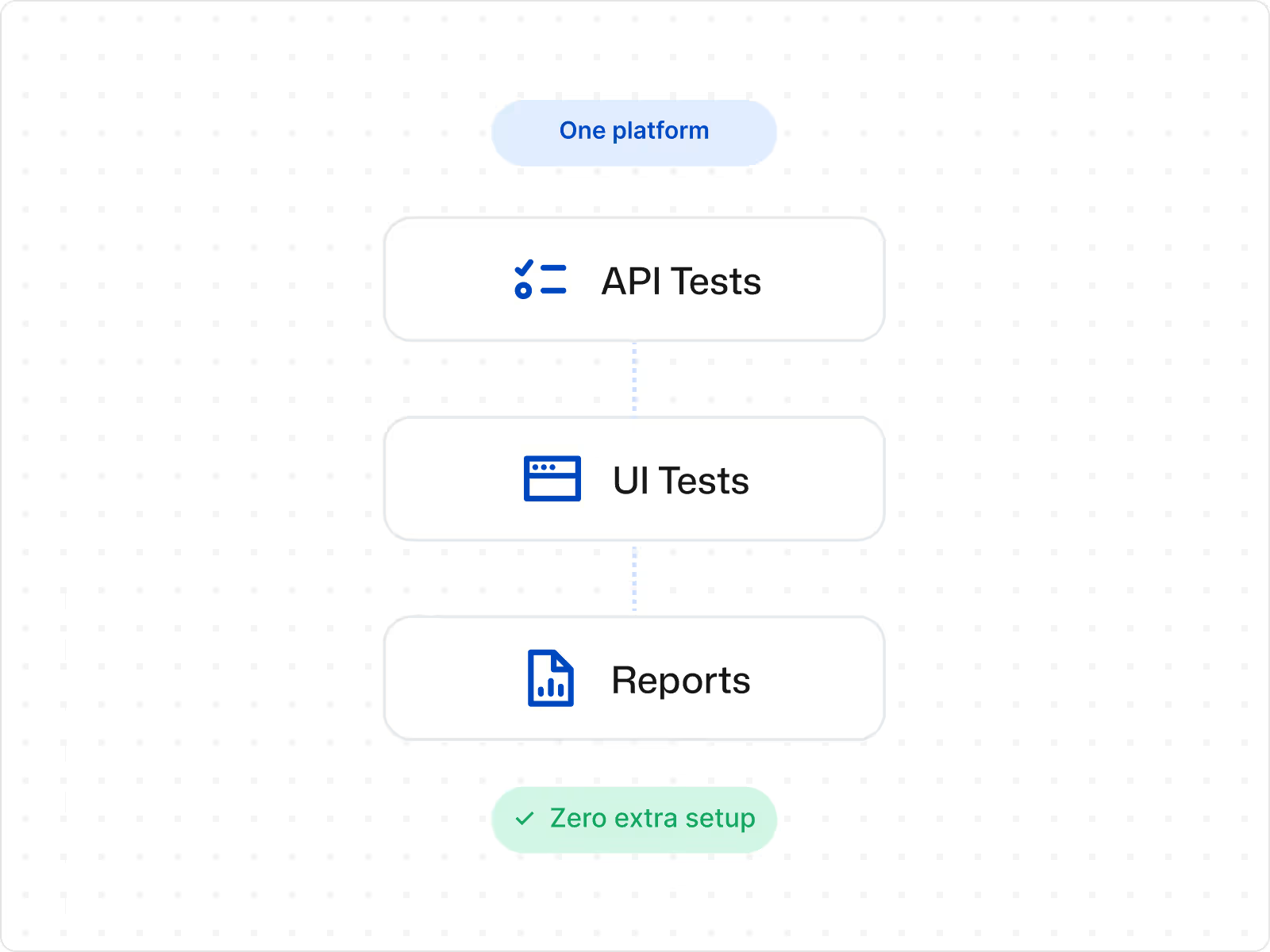
In Tosca, API testing typically means a separate module, separate licensing, and separate configuration. In Thunders, API flows are tested in natural language alongside UI tests; same platform, same interface, same reporting. Full product coverage without the vendor sprawl or per-feature license activation.
Native API testing, zero extra setup
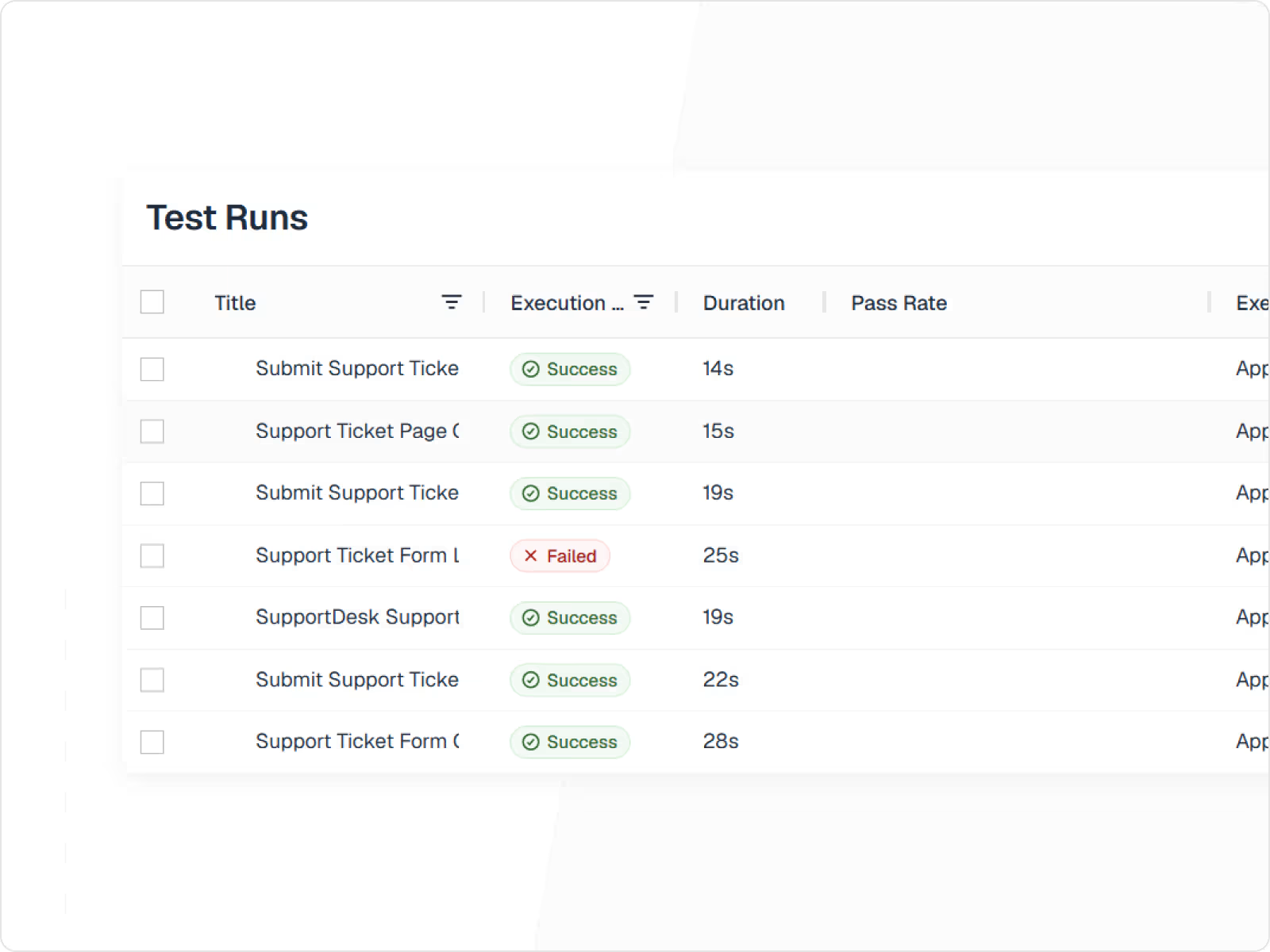
Assertions and endpoint chaining in natural language
Unified UI and API test management
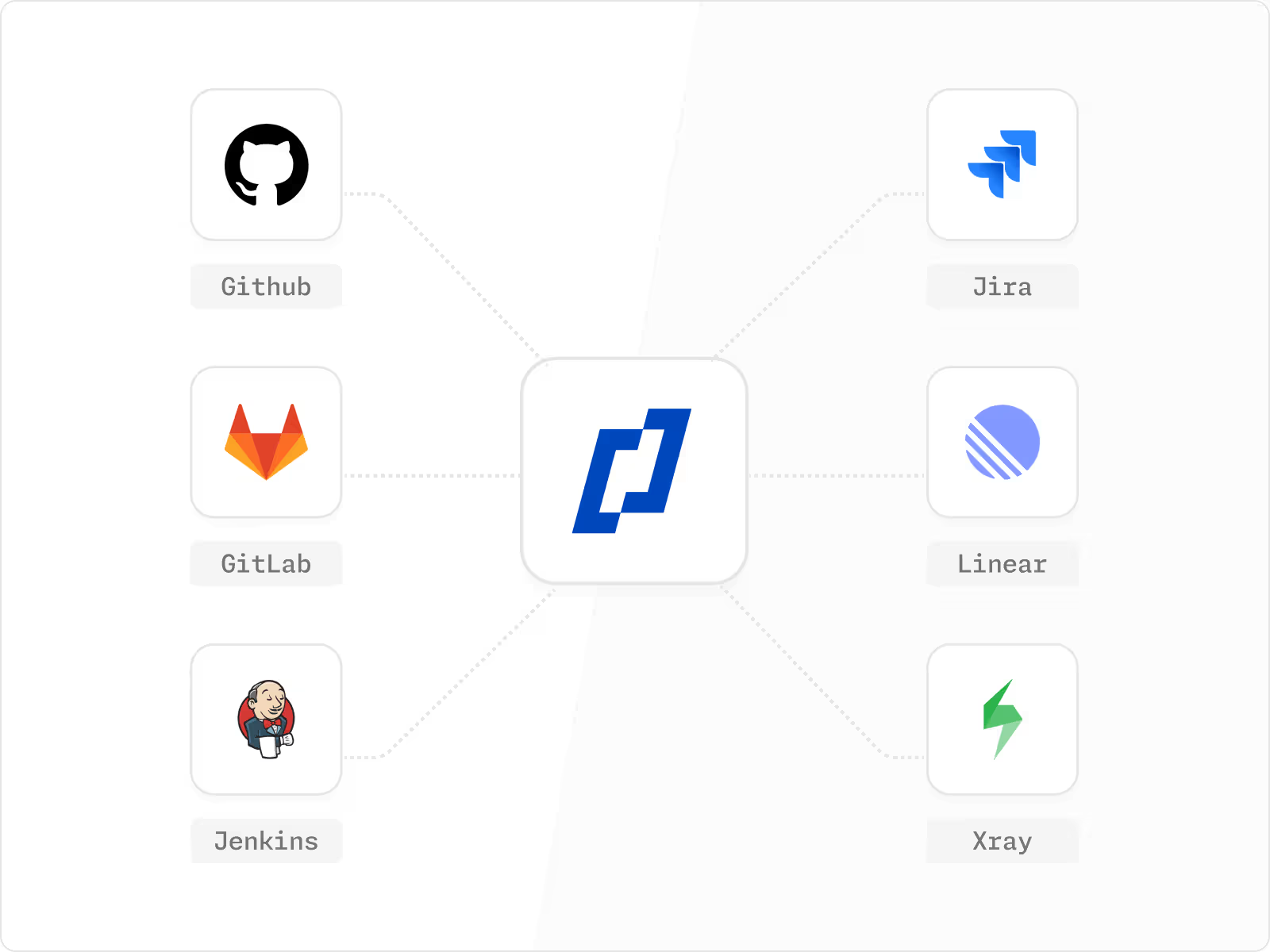
Tosca integrates broadly, but most integrations live behind configuration and consulting hours. Thunders plugs natively into GitHub, GitLab, Jenkins, Jira, Linear, and Xray from day one. Your CI/CD pipeline triggers tests automatically. Failures land as filed issues with full context. No custom glue code. No integration sprints. No proprietary version control to wrestle with.
Native CI/CD integrations (GitHub, GitLab, Jenkins)
Built-in connectors, zero maintenance
Issue tracking sync (Jira, Linear, Xray)
Standard, Git-compatible version control
Wondering if Thunders is a better platform for you? See this video walkthrough to learn the ins and outs of Thunders’ application and how it can help your team.
The core difference lies in how a test is conceived. Tosca relies on a model-based approach: you model the application as reusable modules, then assemble test cases from those models. Its strength is coverage, but the trade-off is configuration depth, with hundreds of options, nested modules and a learning curve so steep that Tosca expert has become a job title in its own right. Thunders starts from intent: you describe the scenario in natural language and the engine generates the executable test, with complexity handled invisibly by the platform. In short, with Tosca the team learns to use the tool, with Thunders the tool learns what the team wants to test.
Tosca was designed for quarterly release cycles, with heavy implementation projects: the Tricentis Academy exists precisely because the platform requires formal training, and the time to the first executable test is measured in weeks or months. Thunders aims for the first test in minutes: no deployment project, no consultant, no certification path, and most teams have a working suite from day one. A practical detail also matters for adoption: Mac OS support for test creation is limited on Tosca, whereas Thunders, being cloud-native, can be used from any machine. For a team that wants to be productive right away rather than after a ramp-up, that's the central argument.
Tosca is positioned in the enterprise segment, with a modular licensing system: separate activations for separate features. Tricentis doesn't publish pricing, with every inquiry going through a sales conversation; third-party sources cite a mid-size deployment between 40,000 and over 100,000 euros per year, a base around 20,000 euros per year, and renewals rising by 15 to 20 percent. On top of the license come the training and consultants needed to operate it. Thunders highlights transparent, published pricing, with no per-feature license activation and no consulting project to get started. The cost gap therefore comes as much from the licensing model as from the human cost of operation.
Tosca's model-based approach is genuinely powerful once the models are built, but power and accessibility pull in opposite directions, and it's accessibility that determines whether the whole team actually uses the tool. Thunders' natural language removes the modeling step: instead of learning a model syntax, you describe the functional goal and the AI turns it into an executable test. This opens test creation to non-technical profiles (PMs, business analysts, customer success) without interpreting model trees or decoding a proprietary syntax. You trade heavy but robust structuring for maximum immediacy and accessibility.
Both integrate with CI/CD chains, but with a difference in effort. Tosca integrates broadly, but most integrations require configuration and consulting hours. Thunders connects natively to GitHub, GitLab, Jenkins, Jira, Linear and Xray from day one: the pipeline triggers tests automatically, and failures become tickets with full context, without custom glue code or an integration sprint. A structural point often overlooked: Thunders uses standard, Git-compatible version control, whereas Tosca relies on a proprietary system that has to be managed on top.
Both reduce fragility, but differently. Tosca's Vision AI provides UI-level self-healing, recognizing elements visually rather than by selector, which is a real improvement over scripted automation. But maintenance at scale still requires Tosca specialists (model updates, license management, environment configuration) and relies on a proprietary version-control system that doesn't allow parallel merging like Git: the bigger the suite, the bigger the team needed to keep it running. Thunders maintains at the intent level, with automatic updates when the interface changes, and automatically detects and resolves flaky tests before they pollute the results, something Tosca handles only in a limited way. Thunders' argument is that maintenance doesn't grow linearly with the size of the suite.
Tosca remains built for large organizations with a complex, heterogeneous application landscape (ERP, SAP, legacy, mainframe), where its coverage and governance at scale make the difference, provided you accept the cost, the training and a centralized QA function. Thunders addresses teams that ship daily and want to democratize testing beyond QA, across web, native mobile and API, without a heavy deployment. In practice: Tosca if the deciding factor is enterprise coverage breadth and orchestration at very large scale; Thunders if the factor is speed of implementation, accessibility for the whole team and total cost.
Tosca's TCO goes well beyond the license. The modular system charges separate activations per feature, the Tricentis Academy and certification represent a training cost, and operating at scale requires dedicated specialists, with often high consultant rates and a significant share added in the first year for implementation. On top comes a structural cost, that of proprietary version control and a proprietary language you have to manage and depend on. Thunders highlights a more contained TCO: setup in minutes with no consulting, no certification, published pricing with no per-feature activation, and Git compatibility that avoids maintaining proprietary tooling.
With Tosca, real self-sufficiency requires mastering the model-based approach: knowing how to model the application, structure modules and navigate model trees, which explains the existence of a Tosca expert role and an academy path. It's this requirement that tends to concentrate access within a centralized QA function and to exclude PMs, business analysts and customer success teams. Thunders aims for the self-sufficiency of non-specialist profiles from the first days: describing a scenario in natural language requires no modeling methodology, no proprietary syntax and no code. The technical barrier to entry is therefore one of the main points of divergence.
Two philosophies of resilience. With Tosca, the model-based approach centralizes the logic: a change is propagated by updating the relevant module, and Vision AI stabilizes UI testing by recognizing elements visually, but this requires keeping the models up to date and mobilizing specialists as the suite grows. With Thunders, the intent-based approach realigns the test on the described goal via auto-healing, with no modeling layer, and automatic flaky-test detection prevents noise from accumulating in the results. Where Tosca requires maintaining a central model faithful to the application, Thunders bets on automatic adaptation from the expressed intent.
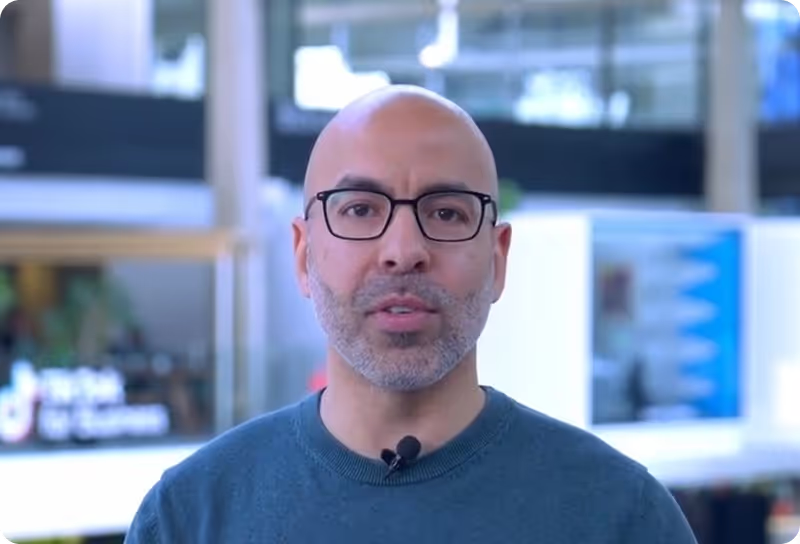
This is our QA of the future.
From the very first tests, Thunders caught real bugs in our interface — bugs that had slipped through all our standard quality processes.
Before Thunders, all UI testing was done manually. With Thunders, everything is end-to-end automated. Thunders lets us generate tests very quickly and improve the overall quality of our product.
Wassim Jouini
CTO @LegalPlace


Thunders is a whole new testing culture, not just another tool.
Automating our tests was a real challenge that classical automation simply couldn't solve. With Thunders, we were able to automate a hundred tests, with no technical expertise required.
Thunders opens up test automation to non-technical roles. Thunders bridges the gap between code and people. With Selenium, it used to take much longer.
Hanen Khalfaoui
QA Manager @Infopro Digital

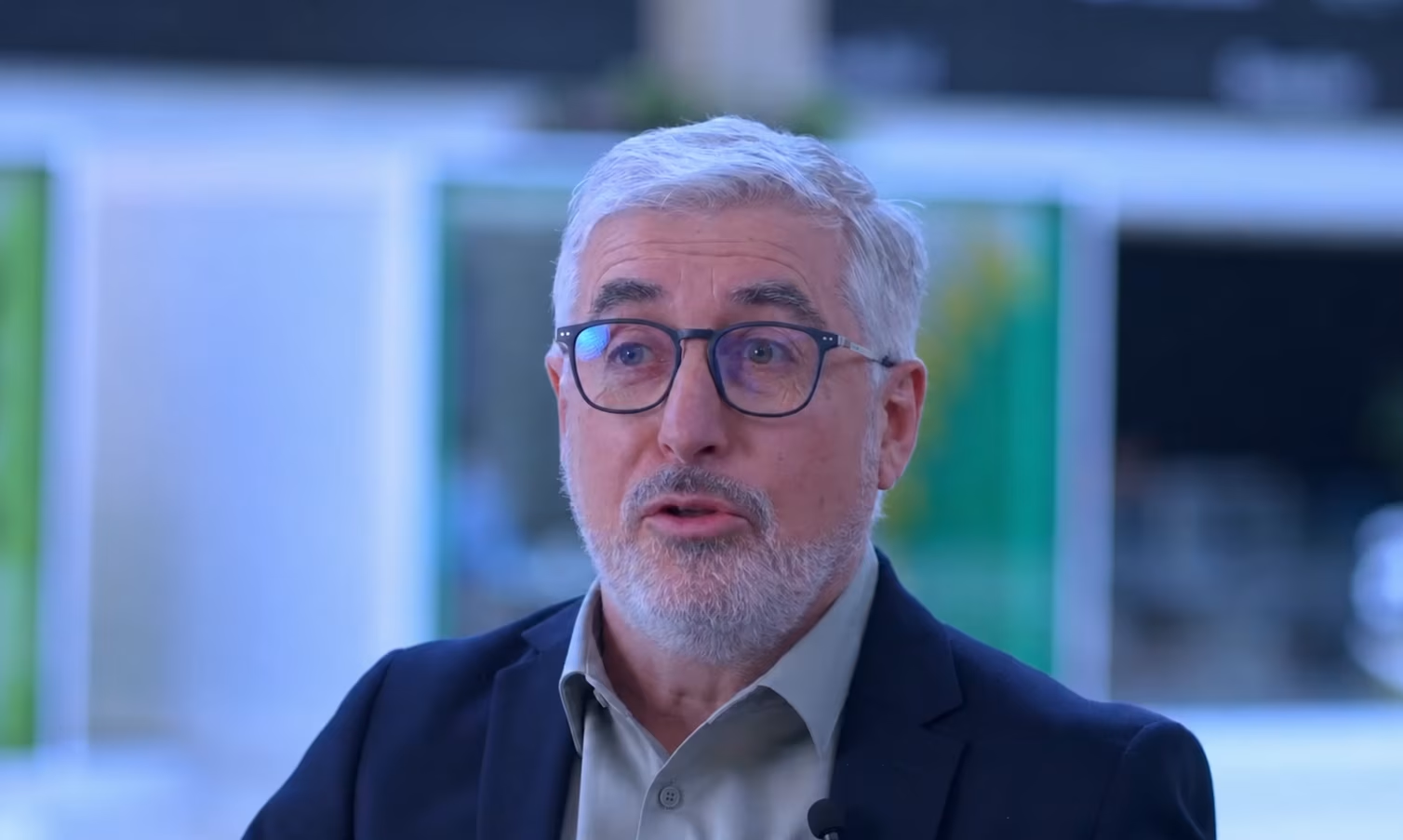
What won me over with Thunders was the testing approach, the maturity, and the innovation.
Thunders delivers far greater resilience compared to classical automation. Thunders introduced a new variable in how we respond to RFPs — and it changes our entire economic model.
Today, Thunders is giving us a glimpse of more resilient tests and better maintainability of test suites. We run proofs of concept with Thunders to validate technologies for our clients.
Jean-Olivier Penin
Co-founder @B/Acceptance

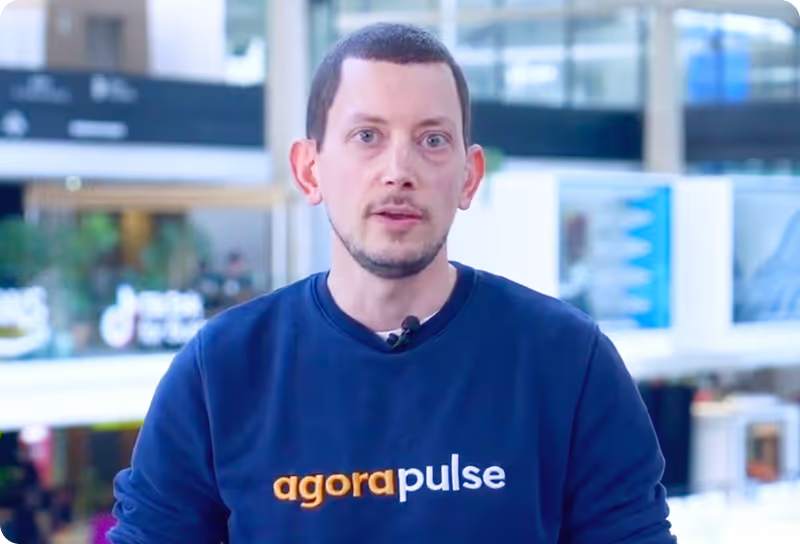
Thunders enabled us to put quality and test creation in the hands of the entire product team.
Our PM teams covered 80% of our test scope in just six weeks with Thunders. After just one month, the entire team was up and running.
Tests are executable immediately and the onboarding was genuinely straightforward. Now it's the PMs who write test plans in plain language directly in Thunders.
Florian Ernoult
VP Engineering @agorapulse