BrowserStack solves one problem brilliantly: a cloud full of real browsers and devices to run your tests on. The tests themselves are still your team’s job to write, fix, and maintain. Thunders is the layer above: AI agents that author, execute, and self-heal your test suite, regardless of where it runs.
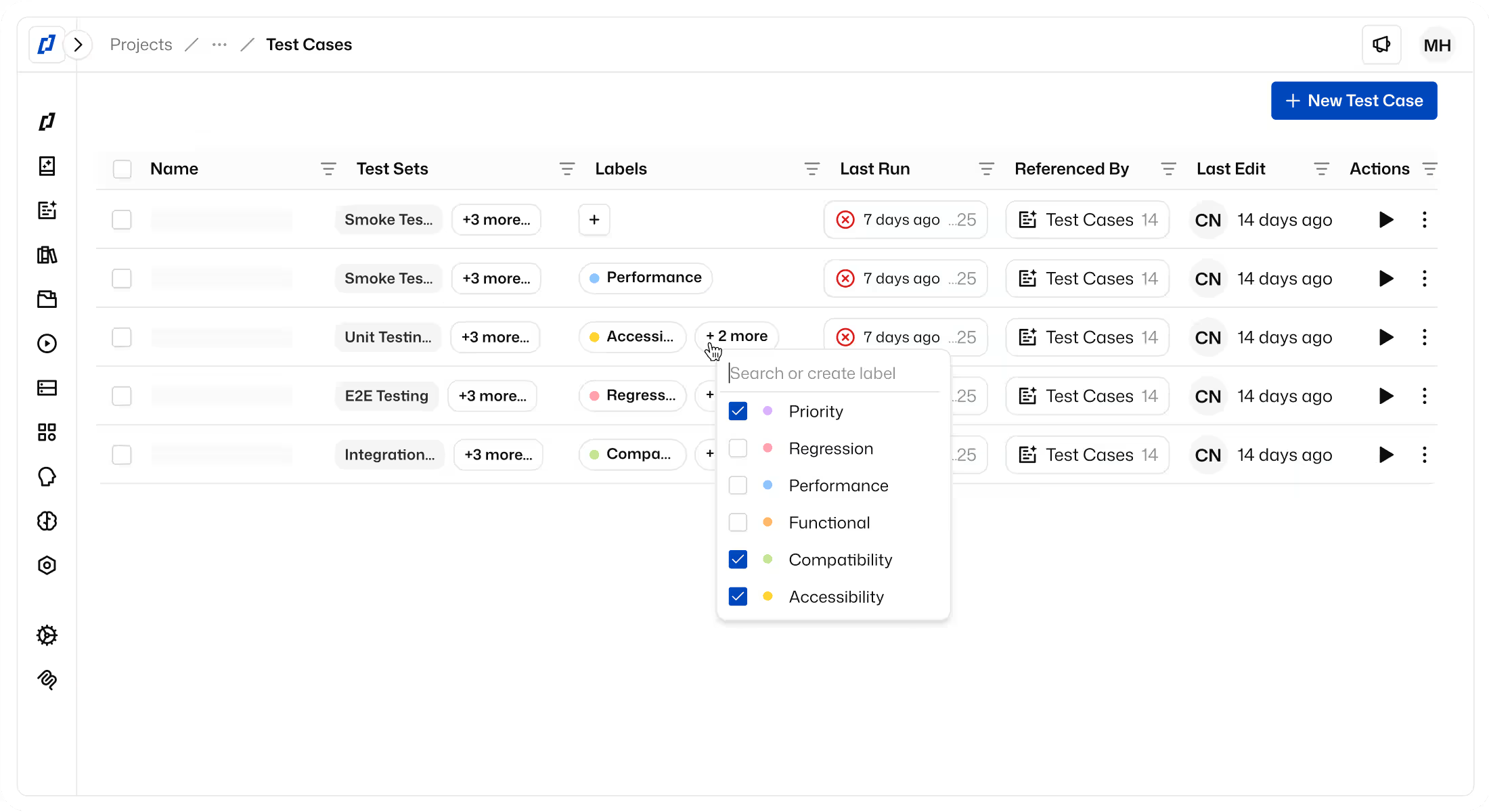
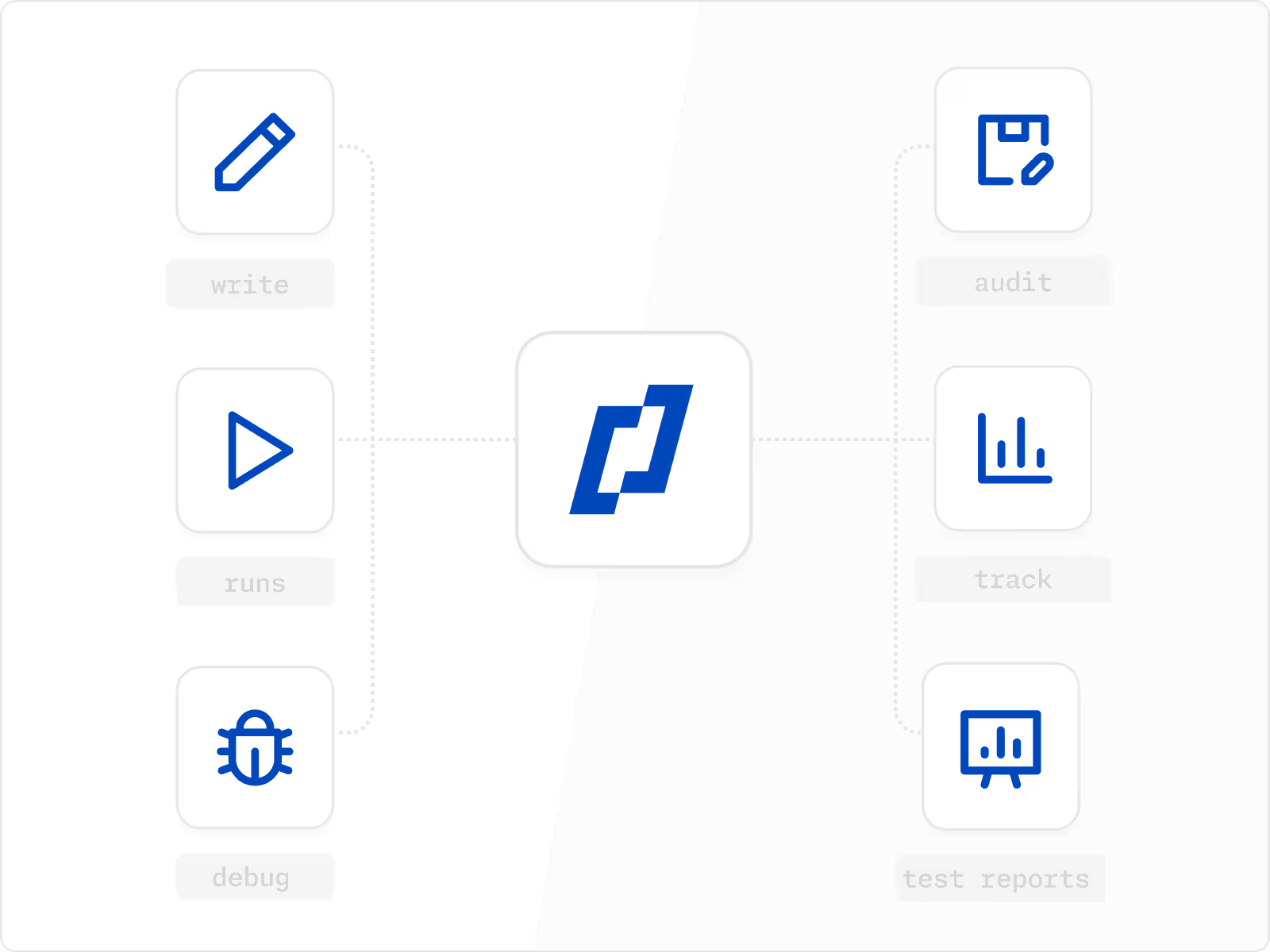
BrowserStack’s product lineup is long because the problem is fragmented: Live, Automate, App Automate, Percy, Test Observability, Test Management, Low Code Automation. Thunders consolidates the whole QA workflow into one interface. Your team writes, runs, debugs, audits, and tracks tests in one place. Less context switching. One source of truth.
No-code, natural language interface
AI-powered test generation from user stories or tickets
Unified UI, API, and accessibility testing
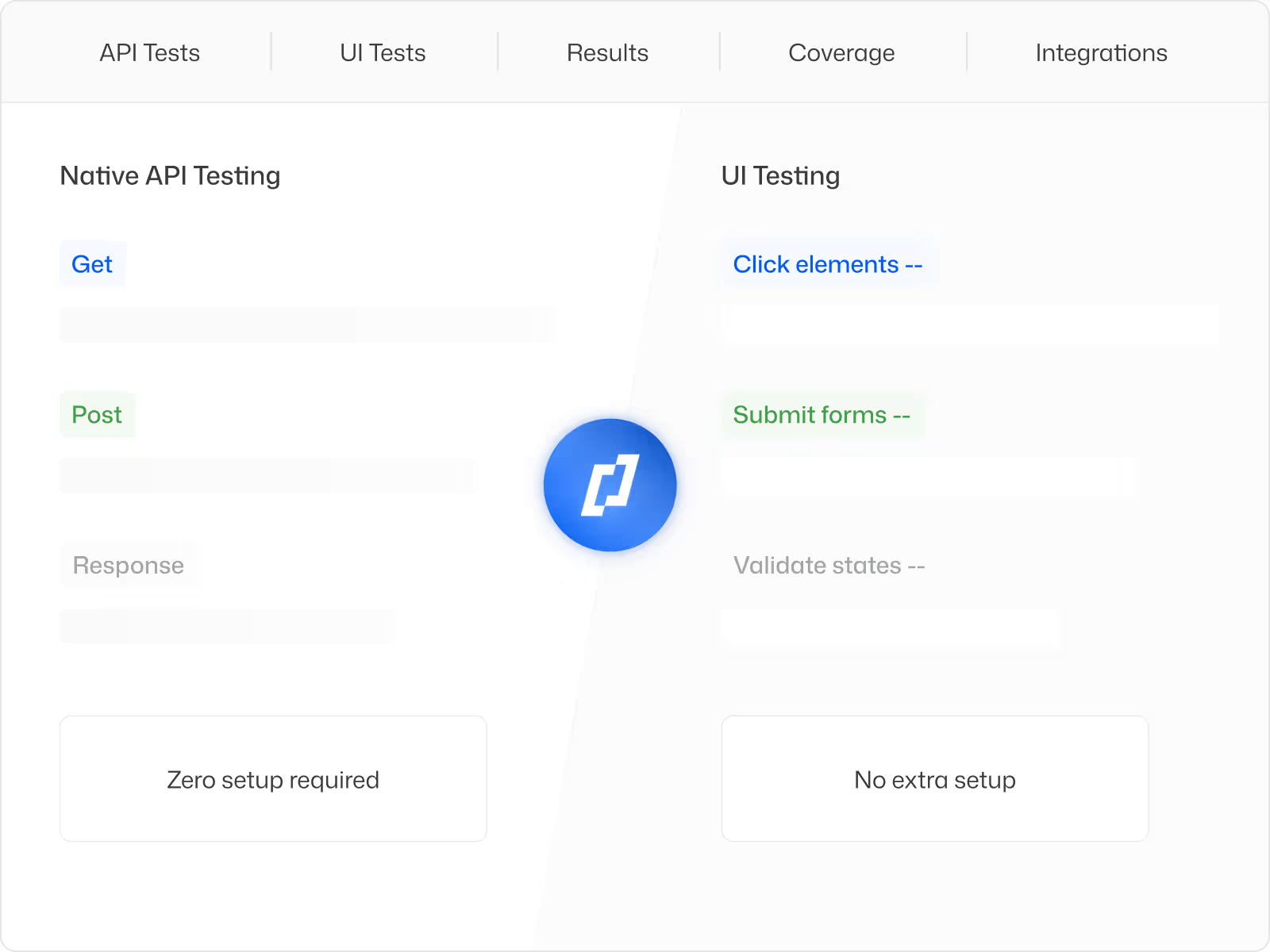
BrowserStack focuses on browser and device execution. Comprehensive API testing typically means another tool in your stack. In Thunders, API flows are tested in plain language alongside UI tests; same platform, same interface, same report. Full product coverage without vendor sprawl.
Native API testing, zero extra setup
Assertions and endpoint chaining in natural language.
Unified UI and API test management
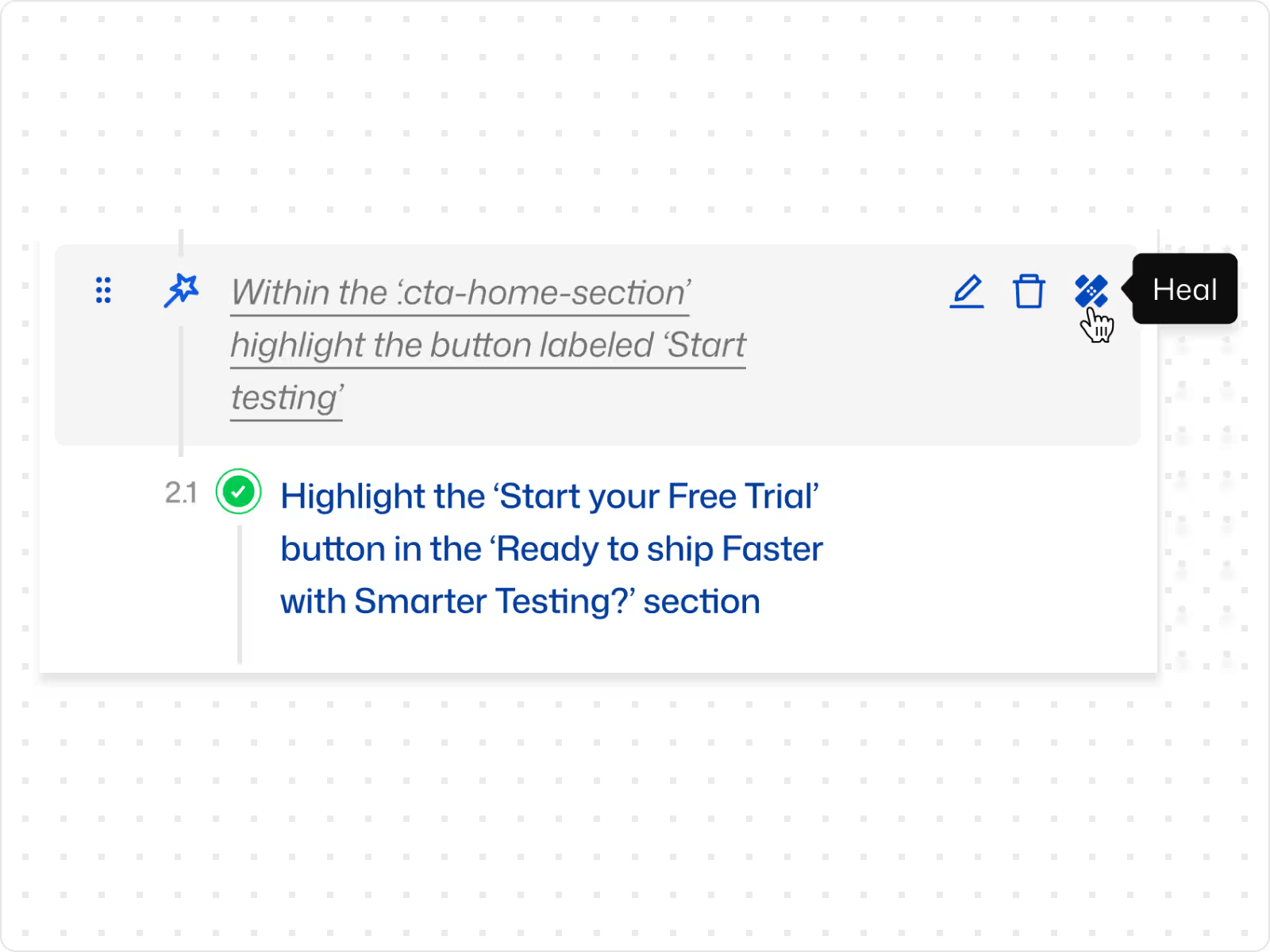
BrowserStack’s real device cloud reduces flakiness from environment drift. It does not reduce the maintenance work when your team renames a button or restructures a page. Thunders does. Self-healing happens at the intent level, so tests adapt to your product as it evolves, without anyone updating selectors.
Self-healing on UI changes
Flaky test detection and auto-resolution
Predictable maintenance cost as your suite grows
Wondering if Thunders is a better platform for you? See this video walkthrough to learn the ins and outs of Thunders’ application and how it can help your team.
The difference is one of nature, not just degree. BrowserStack is first and foremost an execution-infrastructure platform: a cloud of real browsers and devices with a range of distinct products (Live and App Live for manual testing, Automate and App Automate for automation, Percy for visual testing, plus accessibility, test management and observability). It runs tests written with Selenium, Playwright or Appium across thousands of combinations. Thunders, by contrast, is first an intent-driven test generator: you describe a journey in natural language and the engine produces the executable test, which AI agents run and repair. In short, BrowserStack excels at the where to run, Thunders at the how to create and maintain the tests.
The savings don't come only from the license price, but from the hidden cost. BrowserStack's pricing covers infrastructure, meaning the execution of tests in the cloud; you still need engineers to write, debug and maintain the tests themselves, which significantly increases the total cost. On top of that comes a fragmented pricing by product and by parallel sessions (for example Automate starting around 129 dollars per month per parallel session), which climbs quickly with volume. Thunders' argument is to compress the heaviest line item, the engineering time for creation and maintenance, through natural-language generation and self-healing. The exact figure depends on your team size and test volume.
Because a Thunders test encodes an intent rather than a script tied to fixed selectors. When the interface evolves, ML-based auto-healing detects the discrepancy and realigns the test on the described goal, and AI agents can automatically update or repair broken cases. That's a layer-level difference with BrowserStack: the latter provides the execution environment, but the robustness of the script stays the responsibility of the team that wrote it, whether in Selenium or Playwright. Thunders shifts that maintenance burden onto the AI.
Honestly, not for absolutely all of them. BrowserStack's strength is its cloud of more than 20,000 real iOS and Android devices and its massive coverage of browser, OS and device combinations, along with specific needs such as network-condition simulation or manual exploratory testing on physical devices. If your primary requirement is validating rendering across hundreds of real hardware configurations, BrowserStack is still built for that. Thunders effectively replaces the creation, functional execution and maintenance of tests on web, native mobile and API; for a very broad hardware-compatibility matrix, the two approaches can be complementary rather than substitutes.
The key lever is portability on the way in: Thunders can take over existing Playwright, Selenium or Cypress suites and convert them into executable test cases, without manual rewriting. Since many teams run precisely Selenium or Playwright on BrowserStack, those suites can serve as the basis for migration. The typical approach is to import the existing journeys, reformulate the new tests in natural language, then connect Thunders to the CI/CD chain already in place. The goal is to avoid the start-from-scratch that often holds back a tool change.
On BrowserStack, automation limits the number of tests running in parallel depending on the plan, and parallelization is paid per simultaneous session, which can become a bottleneck as the suite grows. The benefit of broad parallelization on the Thunders side is not turning each additional simultaneous session into a cost line that throttles test throughput. In concrete terms, it aims for faster regression runs without constantly trading off between speed and session budget.
The test describes what needs to be accomplished (go to checkout, add a product, complete payment) and not a rigid technical path to a specific element. When the UI changes, ML auto-healing identifies the new state matching the intent and readjusts the test on its own, without rewriting. With BrowserStack, an interface change that breaks a selector in a Selenium or Playwright script has to be fixed by an engineer, since the platform runs the script exactly as written. It's this shift from manual repair to automatic adaptation that Thunders highlights.
Thunders speaks mainly to teams that want to move fast and open test creation beyond QA, including PMs, developers and analysts, on web, native mobile and API applications, without setting up infrastructure or writing scripts. BrowserStack remains particularly relevant for organizations whose priority is real hardware coverage at scale and manual testing on physical devices, and that already have engineers to write the scripts. In practice: Thunders if the bottleneck is the time to create and maintain tests and accessibility for non-technical profiles; BrowserStack if the dominant need is the breadth of the execution fleet.
This is BrowserStack's historic domain, and it should be acknowledged: it offers instant access to a very large fleet of real devices without maintaining physical hardware, with more than 20,000 iOS and Android devices and a usage scale on the order of a billion tests per year. Thunders doesn't position itself as a hardware execution farm: its value is the generation, functional execution and self-healing of tests in natural language, cross-browser on the web side and on native mobile. In other words, if the deciding factor is the number of real hardware combinations, BrowserStack keeps the edge; if it's the speed of creation and test resilience, it's Thunders. The honest message is that these aren't exactly two identical products.
BrowserStack mainly offers to run tests written elsewhere (Selenium, Playwright, Appium), complemented by a low-code AI-assisted automation component and a test-management suite. Creation therefore stays largely in the team's hands, with the associated code and its maintenance. Thunders flips the center of gravity: the starting point is the natural-language description, and the AI takes charge of producing the test, running it via agents and repairing it. So you're not comparing two strictly equivalent tools, but an execution-and-coverage platform against an intelligent test generator centered on authoring and maintenance.
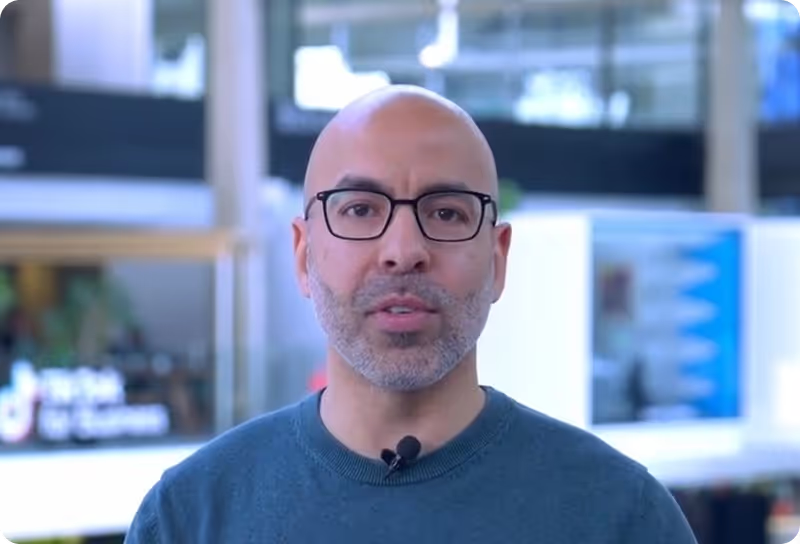
This is our QA of the future.
From the very first tests, Thunders caught real bugs in our interface — bugs that had slipped through all our standard quality processes.
Before Thunders, all UI testing was done manually. With Thunders, everything is end-to-end automated. Thunders lets us generate tests very quickly and improve the overall quality of our product.
Wassim Jouini
CTO @LegalPlace


Thunders is a whole new testing culture, not just another tool.
Automating our tests was a real challenge that classical automation simply couldn't solve. With Thunders, we were able to automate a hundred tests, with no technical expertise required.
Thunders opens up test automation to non-technical roles. Thunders bridges the gap between code and people. With Selenium, it used to take much longer.
Hanen Khalfaoui
QA Manager @Infopro Digital


What won me over with Thunders was the testing approach, the maturity, and the innovation.
Thunders delivers far greater resilience compared to classical automation. Thunders introduced a new variable in how we respond to RFPs — and it changes our entire economic model.
Today, Thunders is giving us a glimpse of more resilient tests and better maintainability of test suites. We run proofs of concept with Thunders to validate technologies for our clients.
Jean-Olivier Penin
Co-founder @B/Acceptance

Thunders enabled us to put quality and test creation in the hands of the entire product team.
Our PM teams covered 80% of our test scope in just six weeks with Thunders. After just one month, the entire team was up and running.
Tests are executable immediately and the onboarding was genuinely straightforward. Now it's the PMs who write test plans in plain language directly in Thunders.
Florian Ernoult
VP Engineering @agorapulse