Testim pioneered AI locators on top of a record-and-replay engine. Thunders skips the recorder entirely. You describe intent in plain language. Agents execute it and adapt when the UI shifts. Maintenance happens at the intent layer. You only step in when the intent itself changes.
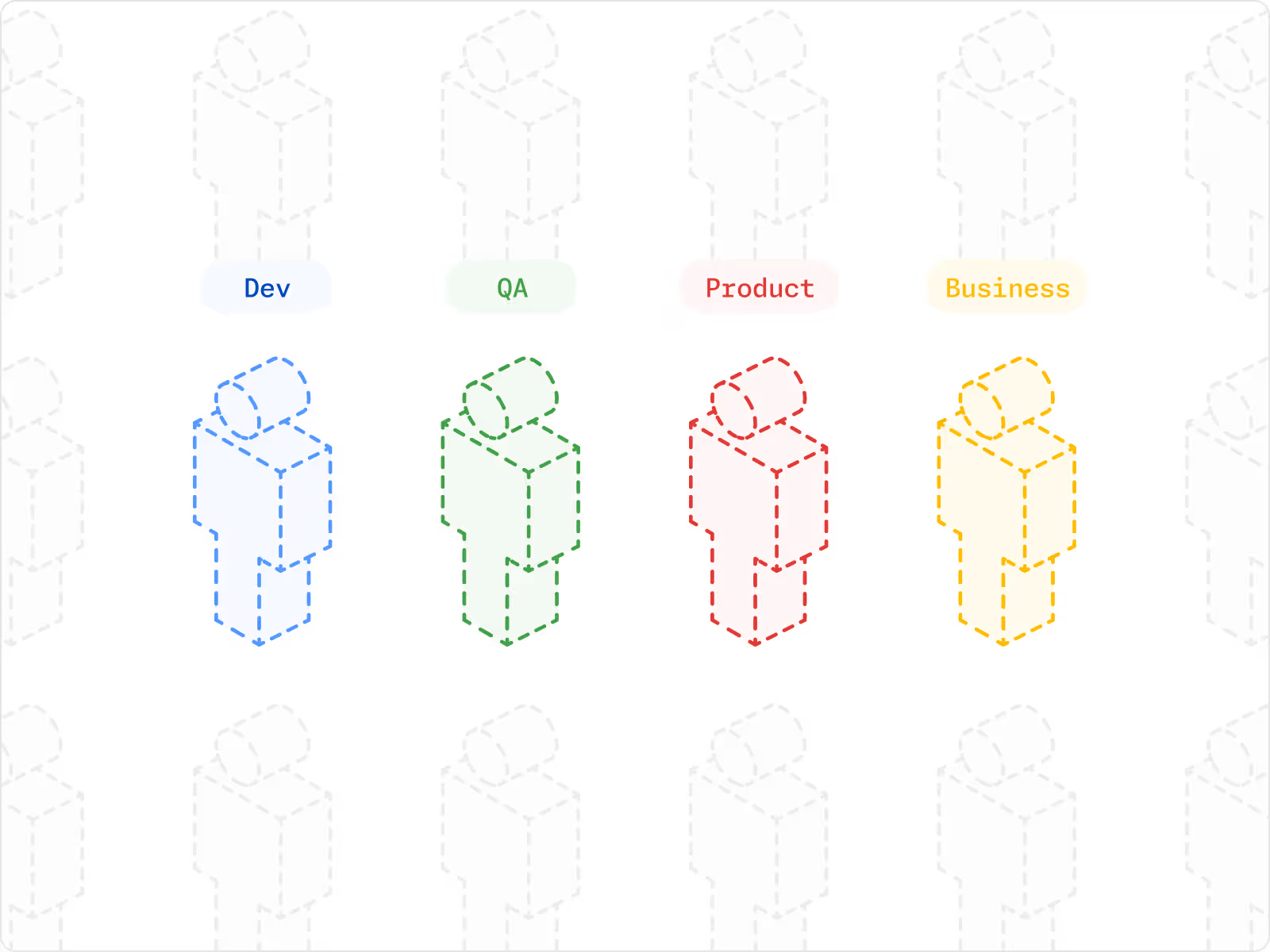
Testim’s recorder lowers the barrier compared to Selenium, but the moment a test breaks or needs branching logic, you are back in JavaScript. Thunders gives every role on your team, QA, product, business, the same way to create, review, and run tests: plain language. No IDE. No CLI. No JavaScript fallback.
No-code, natural language interface
Native intent-based test generation from specs or user stories
Role-based access for QA, dev, product, and business profiles
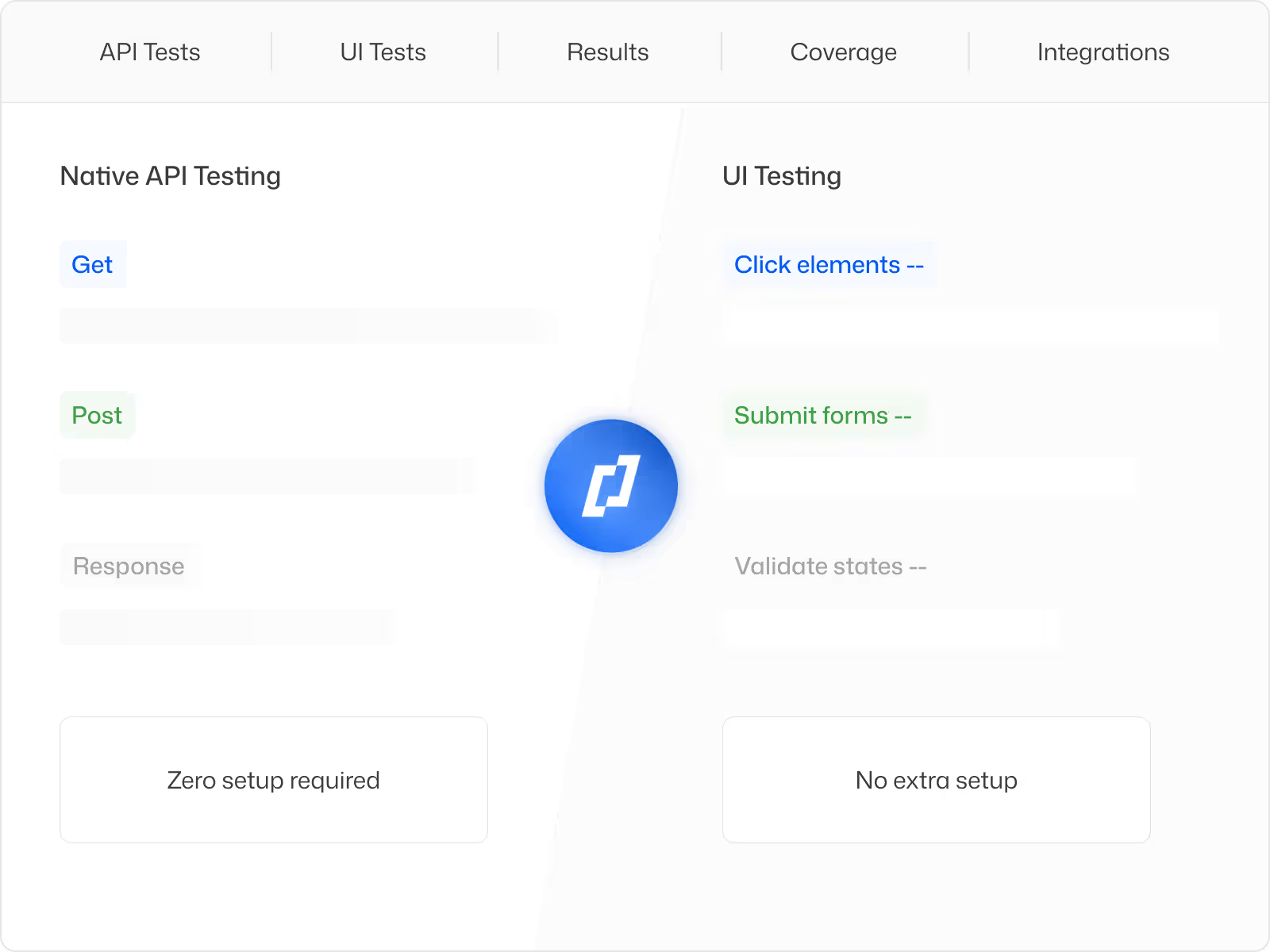
In Testim, comprehensive API testing typically means integrating with separate tooling or stitching together custom steps. In Thunders, you describe API flows in natural language alongside your UI tests. Authentication and endpoint chaining are handled automatically. Assertions are written in natural language. One platform. One report. No vendor sprawl.
Native API testing, zero extra setup
Natural-language assertions and automatic chaining
Unified UI and API test management
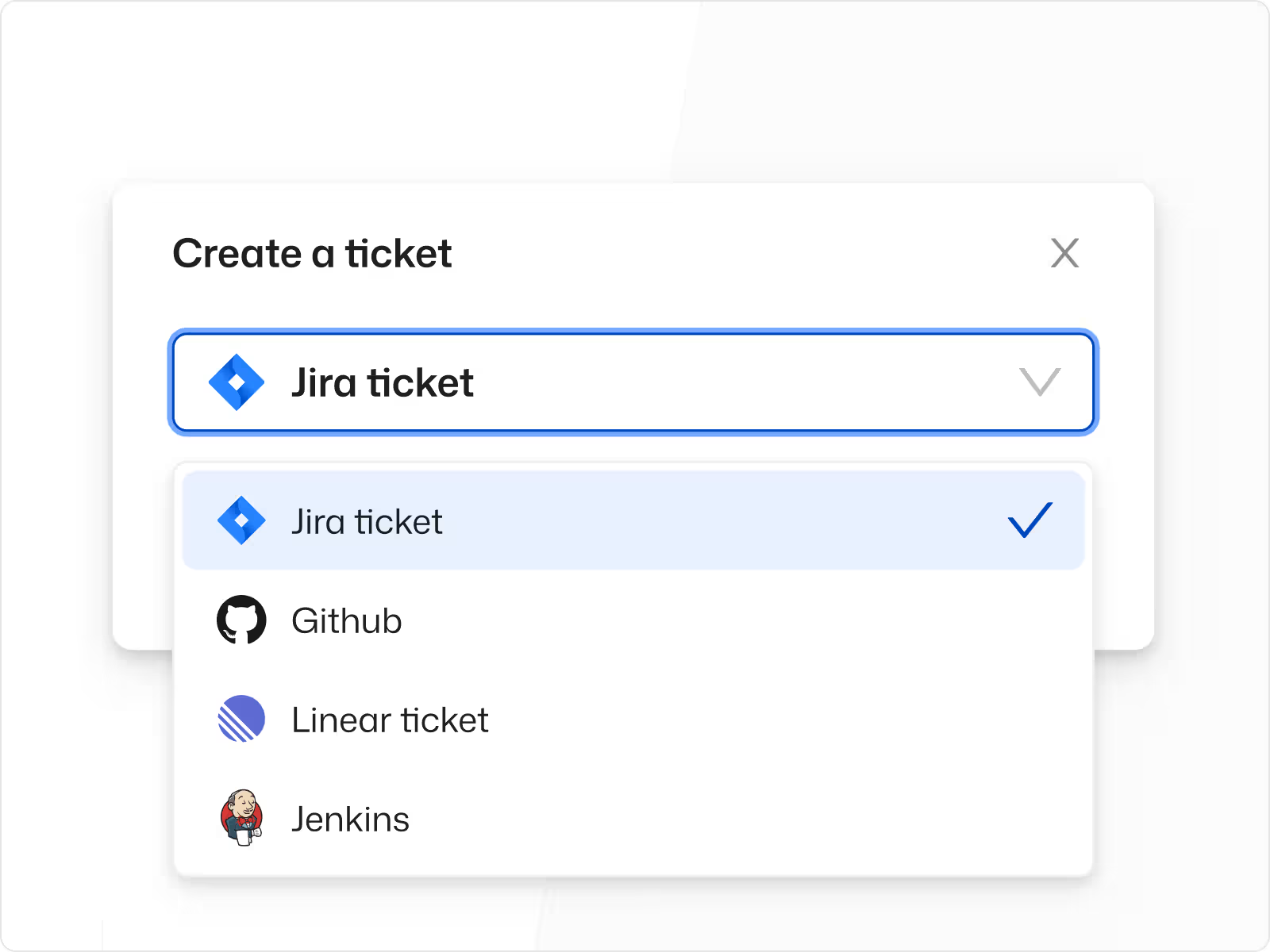
Testim integrates with the usual CI/CD and issue trackers, but tests run inside its proprietary execution environment, and the AI model you train is tied to the platform. Thunders connects natively to GitHub, GitLab, Jenkins, Jira, Linear, and Xray, supports self-hosting, and avoids the vendor lock-in that comes with platform-specific AI training.
Native CI/CD integrations (GitHub, GitLab, Jenkins)
Built-in connectors, zero maintenance
Self-hosting and on-prem deployment options
Wondering if Thunders is a better platform for you? See this video walkthrough to learn the ins and outs of Thunders’ application and how it can help your team.
The core difference is the test-creation paradigm. Testim relies on a recorder via a browser extension: you navigate your application and the tool captures each click, input and assertion, then converts them into test steps. Thunders starts from intent instead: you describe the scenario in plain language and the parsing engine generates the executable test, including assertions and edge cases. In practice, Testim is action-based (you capture what you do) and Thunders is intent-based (you declare what you want to validate). That single distinction ripples into maintenance, accessibility and resilience, covered in the points below.
A recorder freezes a sequence of interactions tied to the state of the interface at the moment of capture. The result stays dependent on the DOM structure and the underlying selectors, even when an AI layer stabilizes them after the fact. Thunders flips the logic: the test describes the functional goal, and the AI decides at runtime how to reach it. This removes manual re-capture every time a flow evolves, and it drops the requirement to replay the application just to create or update a test.
Testim's self-healing works by building a composite fingerprint of each element from multiple attributes, then comparing a changed element against that stored fingerprint to relocate the correct target. It's effective, but it stays a repair at the locator level. Several analyses in fact distinguish locator-fallback healing (Testim) from intent-based healing, with the latter absorbing more change. Thunders sits on the intent side: because the test describes the action rather than a hard-coded selector, a UI redesign that would break a fingerprint doesn't invalidate the described goal. That's what underpins Thunders' claim of maintenance reductions on the order of 80 to 88 percent.
Testim's recorder lowers the barrier compared to Selenium, but it has a clear limit: as soon as a test breaks or you need to add conditional logic, you fall back into JavaScript, which effectively shuts out non-technical profiles. Thunders gives every role, QA, product and business, the same way to create, review and run tests: plain language, with no IDE, no CLI and no recourse to JavaScript. A PM or an analyst can describe a checkout journey without knowing selectors, reusable components or code. Test creation therefore moves beyond the one team able to debug recorder scripts.
With Testim, full API coverage generally goes through integrating a separate tool or cobbling together custom steps, outside the main test flow. Thunders unifies UI and API testing on a single platform and in a single report: you describe API journeys in natural language alongside your interface tests, authentication and endpoint chaining are handled automatically, and assertions are also written in natural language. There's no extra configuration, no tool sprawl and no dedicated API license. One platform, one language, one report.
Two levers. On time: Thunders claims roughly a 90 percent cut in test-creation time (from a spec-to-selector cycle down to a single prompt), plus the maintenance avoided thanks to the intent-based approach. On cost and predictability: Testim doesn't publish self-serve pricing, so its cost stays opaque until a sales conversation, and its best value shows up at scale, which makes it hard to justify for smaller teams. Thunders' ROI argument therefore combines measurable time savings with a more accessible model, where the return on Testim depends heavily on volume.
The dependency point in Testim is twofold: tests run in a proprietary execution environment, and the AI model your team trains over time (the Smart Locators' learning) stays tied to the platform, so it's hard to recover if you leave. Thunders reduces that lock-in in several ways. First, through its intent-based approach, which limits dependence on a specific AI model accumulated on the platform. Second, through native connectors to GitHub, GitLab, Jenkins, Jira, Linear and Xray, with no glue code to maintain. Finally, through self-hosting and on-prem deployment options, announced as coming soon, which address teams that want to keep control of their execution environment. The idea: not to lock in either the tests or the accumulated intelligence in a proprietary format.
Thunders covers web in cross-browser mode, native iOS and Android apps, and API flows, all from the same natural-language interface. Testim addresses web, mobile and Salesforce, but through separate modules and with an experience historically centered on the web (some reviews note mobile limitations). Thunders' argument is unification: one language and one workflow regardless of the type of application under test.
Because a Thunders test encodes an intent (go to checkout, add a product, complete payment) rather than a fixed CSS selector. Testim already mitigates the problem with its Smart Locators, which compare a changed element to a multi-attribute fingerprint, but as soon as a redesign exceeds what the fingerprint recognizes, manual intervention returns. Thunders detects the difference through its ML-based auto-healing, then realigns the test on the described goal, which lets it claim tests that survive UI redesigns without a manual update.
Natural language as the common denominator: QA, dev, PM and analysts all work on the same tests, readable by everyone, which removes the translation between what the business wants to validate and what the technical test actually does. Collaboration doesn't stop at authoring: one-click ticket creation sends failures into Jira, Linear or GitHub with full context, reproduction steps and screenshots, whereas Testim keeps most of its reporting inside its own interface. Tests become living documentation updated on every run, and the native, zero-config CI/CD integration cuts the plumbing work between tools. The stated goal is to make quality a responsibility shared by the whole product team.
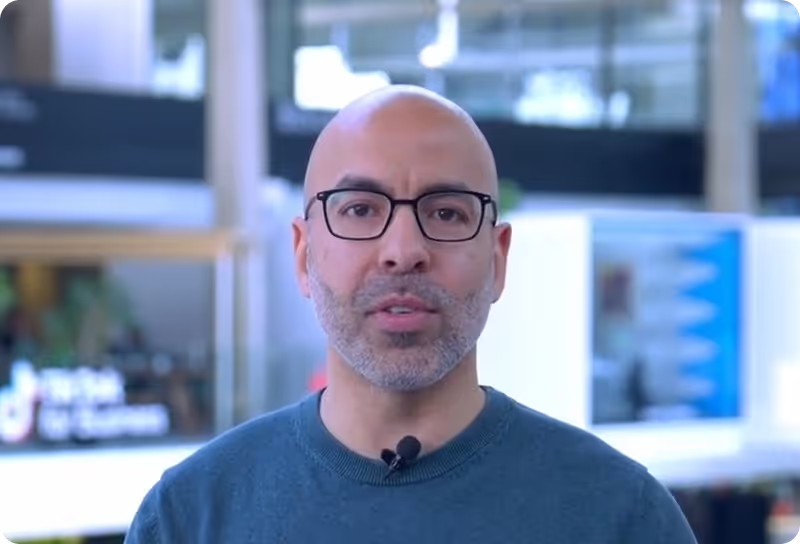
This is our QA of the future.
From the very first tests, Thunders caught real bugs in our interface — bugs that had slipped through all our standard quality processes.
Before Thunders, all UI testing was done manually. With Thunders, everything is end-to-end automated. Thunders lets us generate tests very quickly and improve the overall quality of our product.
Wassim Jouini
CTO @LegalPlace


Thunders is a whole new testing culture, not just another tool.
Automating our tests was a real challenge that classical automation simply couldn't solve. With Thunders, we were able to automate a hundred tests, with no technical expertise required.
Thunders opens up test automation to non-technical roles. Thunders bridges the gap between code and people. With Selenium, it used to take much longer.
Hanen Khalfaoui
QA Manager @Infopro Digital


What won me over with Thunders was the testing approach, the maturity, and the innovation.
Thunders delivers far greater resilience compared to classical automation. Thunders introduced a new variable in how we respond to RFPs — and it changes our entire economic model.
Today, Thunders is giving us a glimpse of more resilient tests and better maintainability of test suites. We run proofs of concept with Thunders to validate technologies for our clients.
Jean-Olivier Penin
Co-founder @B/Acceptance

Thunders enabled us to put quality and test creation in the hands of the entire product team.
Our PM teams covered 80% of our test scope in just six weeks with Thunders. After just one month, the entire team was up and running.
Tests are executable immediately and the onboarding was genuinely straightforward. Now it's the PMs who write test plans in plain language directly in Thunders.
Florian Ernoult
VP Engineering @agorapulse