Mabl was an early mover in AI test automation, anchored on its Chrome-based Trainer and auto-healing tests. Thunders takes the next step: no recorder, no desktop app, no credit budget to babysit. Describe the test, and AI agents handle the rest.
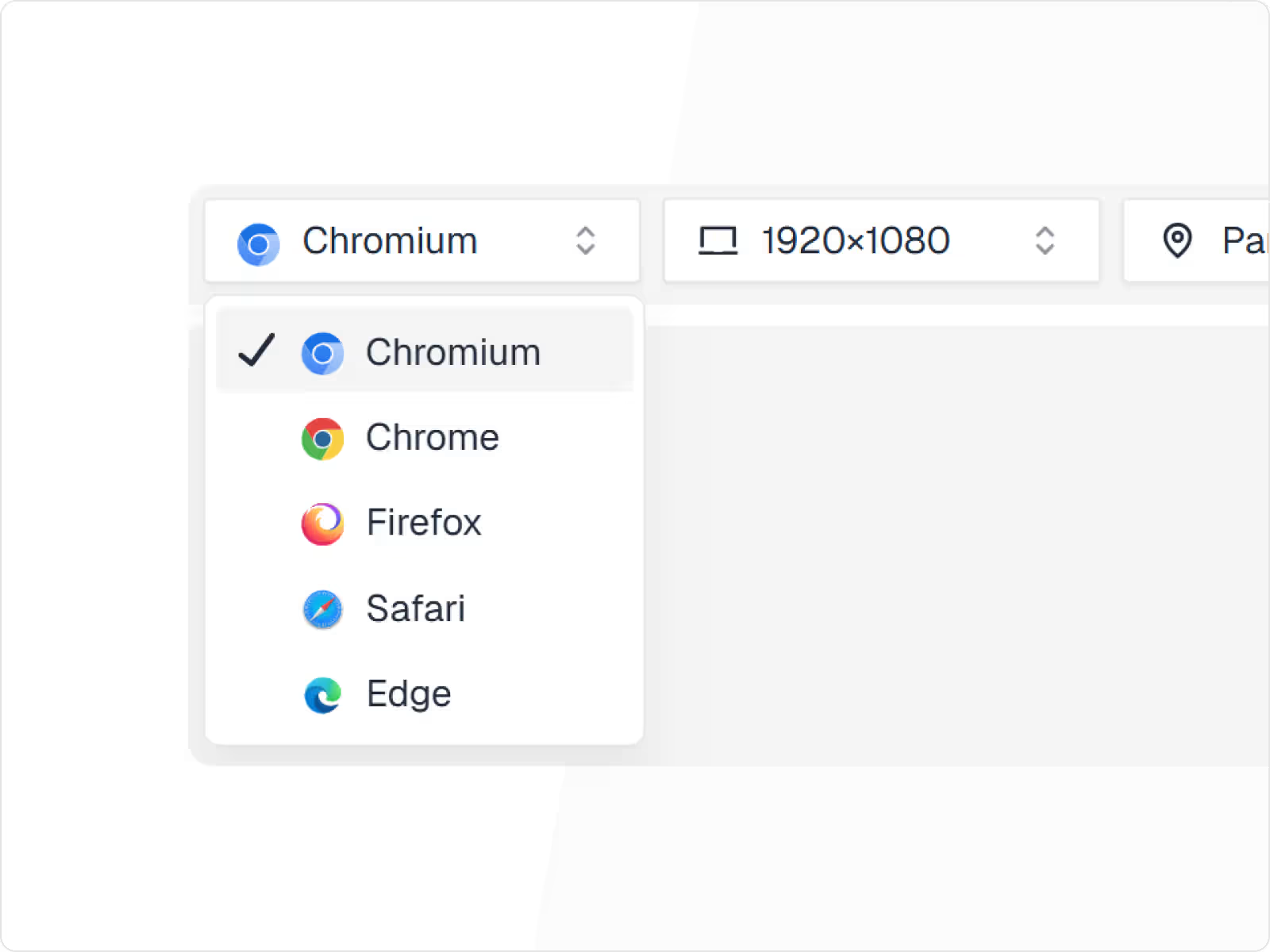
Mabl’s Trainer is a Chrome-based desktop app. It works well on the machines it is installed on, in the browser it supports, when nothing about the page is unusual (canvas elements, file uploads, basic auth popups all have known limitations). Thunders runs entirely in your browser, on any OS, and does not require capturing flows by walking through them.
No-code, natural language interface
Browser-based, no desktop install
AI-powered test generation from user stories or tickets
Role-based access for QA, dev, product, and business profiles
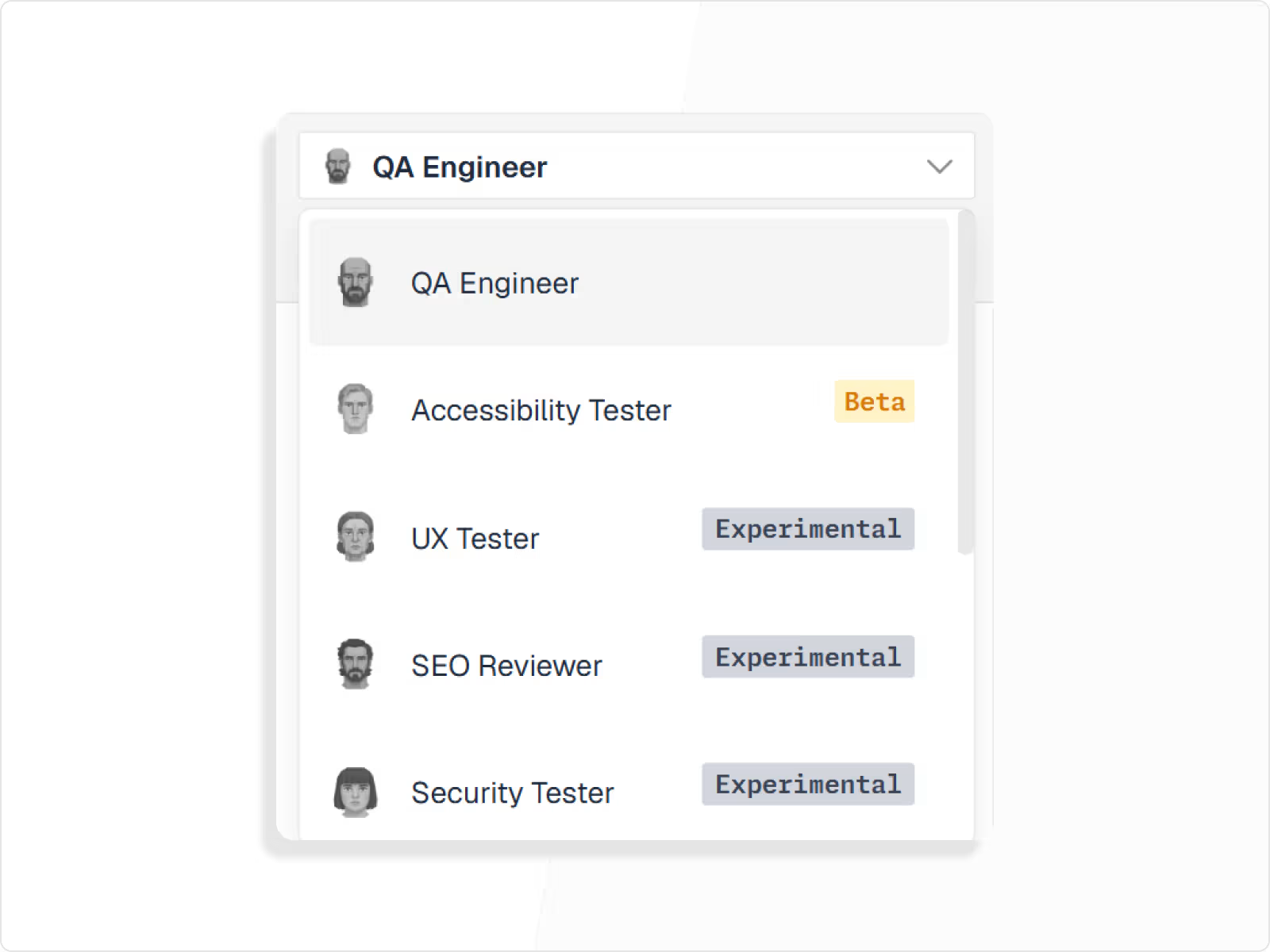
Mabl covers visual, API, performance, and accessibility, but each test is authored from a single user’s path. Thunders runs the same flow through multiple AI Personas automatically: SEO reviewer, accessibility tester, security auditor, plus custom personas you define. Coverage expands without your team writing more tests.
Built-in accessibility, SEO, and security personas (alpha)
Custom personas for your business context
One flow, multiple lenses, automatic coverage
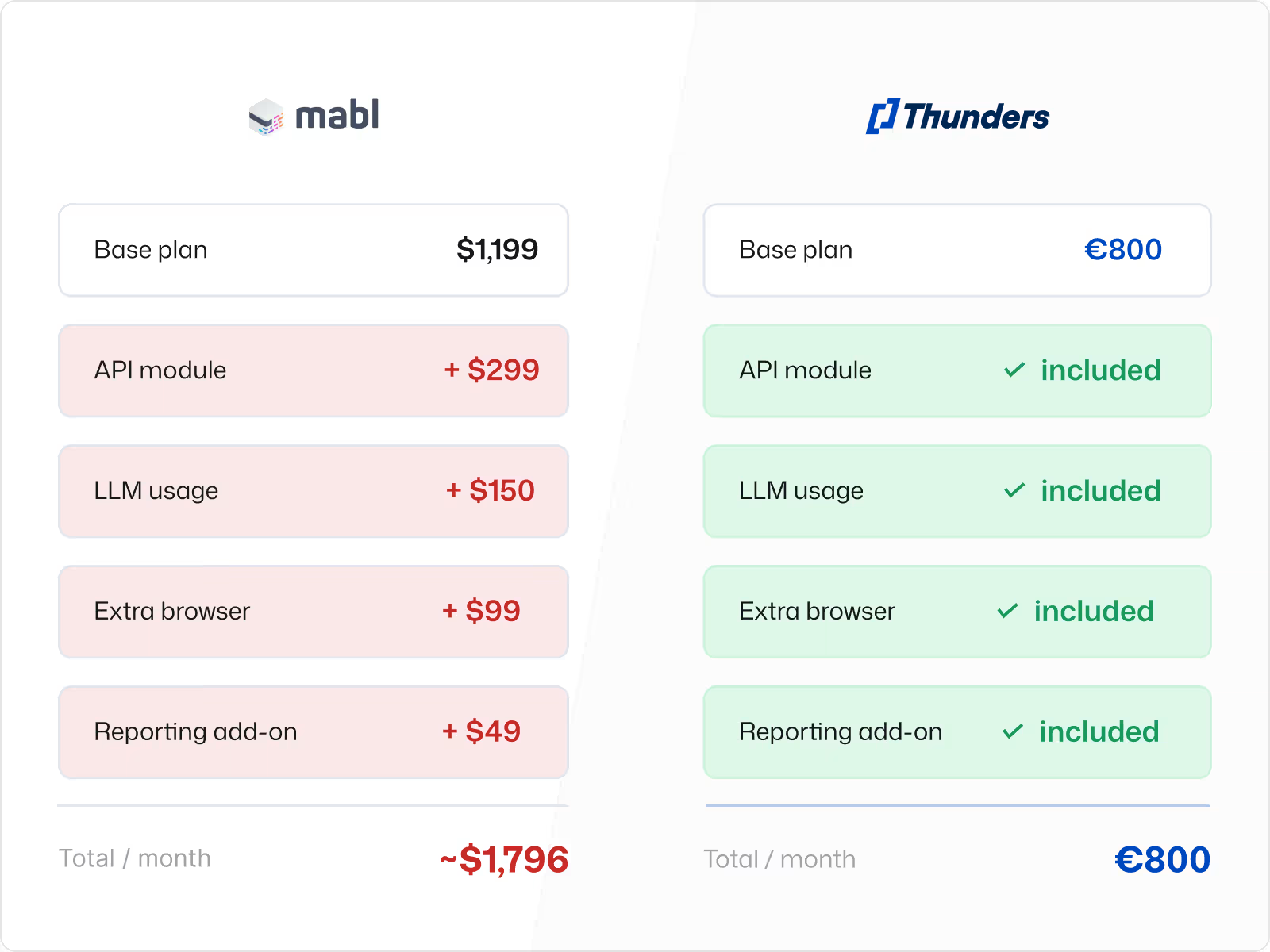
Every Thunders plan is public: monthly price, credit allowance, and the credit cost of every action. If you exceed your allowance, tests keep running at a published overage rate (€0.80 per credit on Pro), and you’re notified before charges apply. Monthly or annual billing, with a 14-day free trial that includes 100 Pro credits.
Fixed monthly or annual subscription with credits included
14 days free trial available
Native CI/CD integrations (GitHub, GitLab, Jenkins)
Wondering if Thunders is a better platform for you? See this video walkthrough to learn the ins and outs of Thunders’ application and how it can help your team.
Both are AI-powered testing platforms, but their entry point differs. Mabl is built around the Trainer, a Chrome application you install and navigate through to record steps; GenAI features were added on top, but the recorder remains the main interface, Chrome only, and advanced logic often requires JavaScript snippets. Thunders relies on an engine that turns a natural-language description into an executable test, with no desktop application, runnable in any browser and on any OS, with a layer of AI agents for execution and self-healing. On top of that come platform-level differences: transparent, published pricing on the Thunders side, and enterprise security (SOC 2, ISO 27001, GDPR). In short, Mabl starts from recording actions in the browser, Thunders starts from intent expressed in plain language.
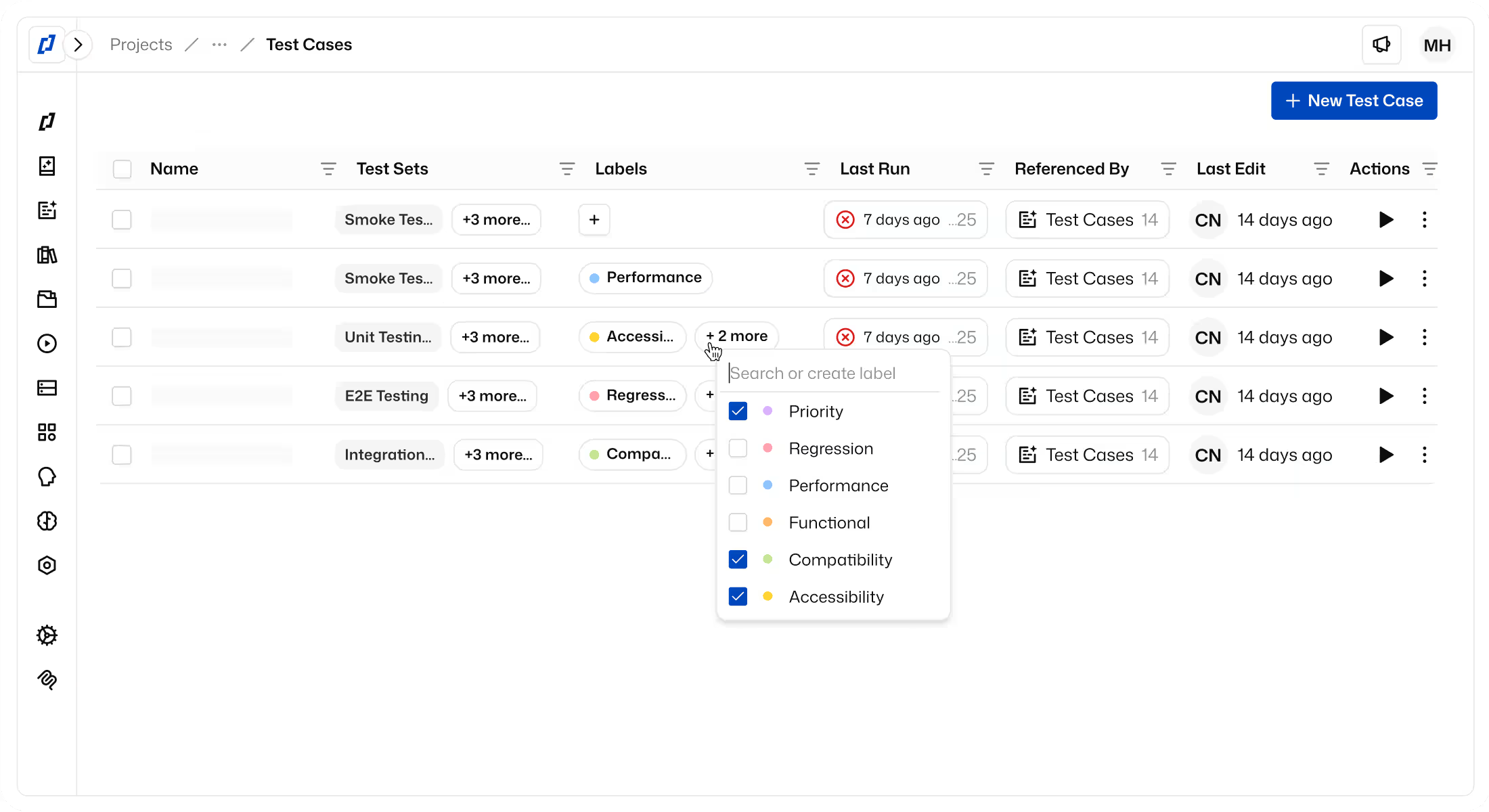
The heart of authoring in Mabl is the Trainer, a Chrome application you install and then walk through the journey in so the tool captures the steps. It works well, but it imposes three constraints: a machine with the application installed, a dependency on Chrome, and having to replay the journey on every creation. Thunders removes all of that: you describe the goal in natural language and the test is generated, with no installation, no dependency on a particular browser, and no journey to walk through beforehand. A QA team writes a test from a spec; a business team checks a checkout flow without ever opening a browser. The recorder wasn't modernized, it's gone.
This is Thunders' stated founding goal, with its announced ambition to reduce testing time by roughly 90 percent. The mechanism is direct: instead of a spec-to-recording-to-adjustment cycle, you describe the scenario in a single sentence and the engine generates the complete test, with assertions and edge cases. The gain comes from removing the intermediate manual steps (no capture, no selectors to tune, no script to write) and from AI-assisted generation.
The key logic is to run the same journey automatically from several angles, without rewriting any test. Thunders offers personas such as SEO reviewer, accessibility tester and security auditor (currently in alpha), along with custom personas you define according to your business context (coming soon). Where a recording-centric tool writes each test from a single user's journey, Thunders reuses the same journey to run it through several profiles, surfacing edge cases the team wouldn't have thought to script. Coverage therefore expands without multiplying the authoring work.
This is a sharp point of contrast. Mabl charges by credit per cloud run: a monthly allowance that can run out before month-end for a team testing on every commit, even though local and CI runs are unlimited. Its official prices aren't published (third-party estimates suggest an entry point around 450 dollars per month), and the entry plan implies an annual commitment. Thunders charges by monthly or annual subscription, with credits included in each plan and a fully published grid: a standard test action at 0.01 credit, an overage rate of 0.80 euro per credit on the Pro plan. Tests keep running beyond the allowance, with a notification before any additional billing, and every plan includes a 14-day free trial (with 100 Pro credits). The argument is predictability and transparency against an opaque credit-based model.
Through the AI personas described above: the same journey is run from the angle of an accessibility reviewer, a security auditor or an SEO reviewer, without building a dedicated suite for each. These accessibility, SEO and security personas are currently in alpha, and custom personas are announced. Mabl also covers accessibility (WCAG checks), visual, API and performance on its platform, but each test there is still written from a single user's journey: there's no native mechanism to automatically replay that journey across several personas. It's this multi-angle coverage without extra authoring that Thunders highlights.
Thunders connects natively to GitHub Actions, GitLab CI, Jenkins, CircleCI and Azure DevOps, with the ability to define which suites trigger on which events (PR, merge, deploy) and which pass/fail thresholds to apply. It also integrates with tracking and collaboration tools such as Jira, Linear, Xray, Slack and Teams. It adds openness through the MCP protocol, which lets AI assistants (Claude, ChatGPT, Cursor, Devin, Windsurf) write, run and analyze tests directly in the workspace. Mabl, for its part, offers solid CI integrations and unlimited local and CI runs.
Thunders (initially Thunder Code) was founded by Karim Jouini and Jihed Othmani, two former Microsoft engineers who had already co-founded Expensya, an expense-management platform sold to Sweden's Medius in 2023 in a deal estimated at more than 100 to 120 million dollars, one of the largest African tech exits. After the acquisition, Jouini served as chief product and technology officer at Medius, where the idea for Thunders was born out of the software-testing inefficiencies he observed there. The company raised 9 million dollars in seed funding, with investors such as Silicon Badia and prominent business angels like Roxanne Varza (Station F) and Karim Beguir (InstaDeep), and was selected for Station F's Future 40 program. It is therefore a team of experienced founders, with a major exit behind them and AI expertise predating the ChatGPT wave.
Because the test encodes an intent rather than a fixed selector, and because AI agents handle its upkeep. ML-based auto-healing detects discrepancies when the interface changes and realigns the test on the described goal, and the agents can automatically update or repair broken cases. Mabl also offers a native auto-heal that tracks elements across multiple attributes and replaces the changed element without manual intervention, but it acts at the selector level of a recorded journey, so when the journey itself changes (a step reordered, logic moved from one page to another) the fix falls back to your team. Thunders repairs at the intent level, which is what lets maintenance stop growing linearly with the size of the suite.
Thunders targets teams that want to move fast and democratize testing beyond QA: product teams, PMs, developers and analysts, across web, native mobile and API applications. The context works in its favor: the software-testing market is estimated at more than 100 billion dollars by 2027, and the founders believe established players like Tricentis or BrowserStack are slow to adopt new technologies, which opens space for an AI-native approach. The maturity of generative AI finally makes natural-language test creation realistic, at a time when pressure on release speed and QA cost reduction has never been higher. Mabl remains a reference for Agile teams focused on the web; Thunders bets on natural-language accessibility and broader coverage as differentiators.
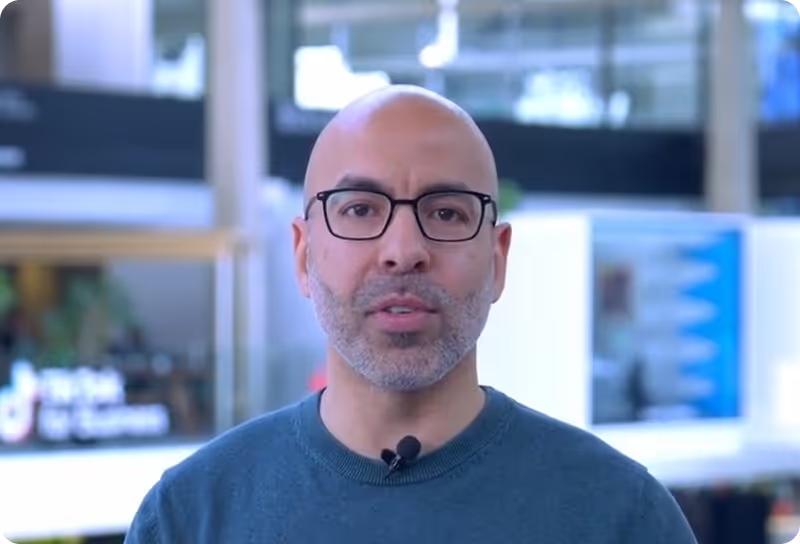
This is our QA of the future.
From the very first tests, Thunders caught real bugs in our interface — bugs that had slipped through all our standard quality processes.
Before Thunders, all UI testing was done manually. With Thunders, everything is end-to-end automated. Thunders lets us generate tests very quickly and improve the overall quality of our product.
Wassim Jouini
CTO @LegalPlace


Thunders is a whole new testing culture, not just another tool.
Automating our tests was a real challenge that classical automation simply couldn't solve. With Thunders, we were able to automate a hundred tests, with no technical expertise required.
Thunders opens up test automation to non-technical roles. Thunders bridges the gap between code and people. With Selenium, it used to take much longer.
Hanen Khalfaoui
QA Manager @Infopro Digital


What won me over with Thunders was the testing approach, the maturity, and the innovation.
Thunders delivers far greater resilience compared to classical automation. Thunders introduced a new variable in how we respond to RFPs — and it changes our entire economic model.
Today, Thunders is giving us a glimpse of more resilient tests and better maintainability of test suites. We run proofs of concept with Thunders to validate technologies for our clients.
Jean-Olivier Penin
Co-founder @B/Acceptance

Thunders enabled us to put quality and test creation in the hands of the entire product team.
Our PM teams covered 80% of our test scope in just six weeks with Thunders. After just one month, the entire team was up and running.
Tests are executable immediately and the onboarding was genuinely straightforward. Now it's the PMs who write test plans in plain language directly in Thunders.
Florian Ernoult
VP Engineering @agorapulse